Mid Winter Forum Presentations
What a great mid winter forum. Thank you to all of the presenters for their insightful presentations.
Below is a link to the presentations:
What a great mid winter forum. Thank you to all of the presenters for their insightful presentations.
Below is a link to the presentations:

Samantha Gunther
Business Manager
Drowning Prevention Auckland
P: 021 129 2760
E: samantha@dpanz.org.nz

Westhaven, Auckland – Drowning Prevention Auckland has been successful in receiving funding for five lifejacket hubs from Maritime NZ.
Auckland is very much surrounded by water environments and a large number of Aucklanders and visitors make use of our water environments. With that; Auckland sadly has the highest number of drownings in the country as it has the highest population. We need to continue our education, collaboration and equipping Aucklander’s and visitors with the right equipment and knowledge to bring the drowning toll down.
Our lifejacket hub project supports strong organisations and clubs to make a difference in reducing drownings. Together we can make lifejackets available to the community through the hubs located around the Auckland region.
The lifejacket hubs will be located in various parts of Auckland. such as boats clubs, surf clubs and community venues where they also support the community for easy accessibility to all Aucklanders. Through these lifejacket hubs we can get key water safety and boating safety messages out and known to all.
This funding will setup five lifejacket hubs in the Auckland region in the following authorities: Rodney District, Waitakere, Auckland City, Franklin District and Manukau City. Each lifejacket hub will have 70 child and adult sized lifejackets available to the community. These lifejackets will equip a large number of Aucklander’s and visitors with lifejackets as needed on boats 6m and under and other water craft.
As Maritime NZ says: “Lifejackets are essential for all recreational activities on the water”. “Each year on average, 19 or 20 people die in recreational boating accidents in New Zealand. Research shows that not wearing a lifejacket is the leading risk factor”.
By having the lifejacket hubs; we want to equip people with a lifejacket when going out onto the water and we want to take the risk factor away and bring down the drowning toll.
Our main aim with this project is to educate and equip the people or groups with the right equipment and key water safety education before they head out onto the water.
For further questions, please contact: samantha@dpanz.org.nz

Westhaven, Auckland – Drowning Prevention Auckland has had seven abstracts accepted for the upcoming World Conference on Drowning Prevention 8th – 10th October in Durban, South Africa.
This biennial conference brings together the world’s leading experts, research, systems and information on drowning prevention, rescue, lifesaving and water safety. The exchange, debate and development are designed to find ways to reduce death and injury in all aquatic environments worldwide.
Drowning Prevention Auckland is excited to present the following abstracts at this prominent conference:
Drowning Prevention Auckland will be represented by our esteemed Research Officer: Teresa Stanley and Aquatic Educator: Lynley Stewart. They have both been working at the organisation and in the sector for many years and are abundantly experienced.
Drowning Prevention Auckland’s Chief Executive, Davin Bray, says that the upcoming World Conference on Drowning Prevention is a great platform to present what we have been researching and implementing for the past two years, and what we plan on doing in the future. We find ourselves leading the way in how we educate and communicate to prevent drownings. It is great to see our hard work getting recognised. Also invaluable is the opportunity to learn, bring back ideas to implement to ensure we continue to deliver best practice.
More information can be found at: www.dpanz.org.nz
For further questions, please contact: samantha@dpanz.org.nz

When: 4.00pm – 6.00pm, Monday 1st July 2019.
Where: 85 Westhaven Drive, Westhaven, Auckland.
Agenda:
4.00pm: Arrival (Tea & Coffee)
4.15pm: Welcome and Update on DPA e-Learning
4.25pm: Pania Elliott from Auckland Council
Navigational Safety Bylaw 2014 Review
4.35pm: Stacey Pidgeon from RLSS Australia
Utilising models and frameworks to assess drowning risk
and to guide prevention strategies
5.05pm: Teresa Stanley from Drowning Prevention Auckland
Are older adults at increased risk of drowning?
5.25pm: Dr Kevin Moran from Drowning Prevention Auckland
Can you get in (safely)?
5.45pm: Panel / Questions
6.00pm: Refreshments

Our very own Kevin Moran contributed to this NZ Listener article this month. Have a read.

Westhaven, Auckland – Drowning Prevention Auckland, the lead agency for water safety coordination and education in the Auckland region, wants to share its four main messages to remember this summer.
Sadly, in 2017 22 people died in preventable drowning incidents in Auckland, double that of 2016. Most (68%) of the drownings in Auckland were male, and almost a quarter (23%) each were aged 15-24 years and over 65 years.
Over half (55%) of the drownings were immersion incidents where people hadn’t intended being in the water. The highest environmental risk in Auckland is beaches where almost one quarter (23%) of drownings occurred. The rate of drowning in the Auckland region at (1.7 per capita) remains one of the lowest in the country. [1]
There have been 12 preventable* drowning deaths in Auckland in the year to December 7, 2018, as per the Water Safety New Zealand report.
Our vision is an Auckland, free from drowning, achieved through the development of water competence and changing knowledge, attitudes and behaviours around water.
The four main messages we suggest all Aucklander’s remember this summer are:
For further questions, please contact: samantha@dpanz.org.nz
[1] WSNZ (2018). Drownbase. New Zealand and Auckland Region Preventable and Non Preventable Drowning Fatalities 2013-2017.

06/12/2018
Westhaven, Auckland – Drowning Prevention Auckland with 360 New Zealand’s expertise have developed a New Zealand first eLearning platform for water safety and have updated their website. The online programme allows participants to learn about the basic water competencies from anywhere in the world, free of charge.
The aim of our eLearning platform is to increase the understanding and knowledge of water safety, as well as assist in the development of practical skills, within the community, workplace and school. Participants can acquaint themselves with competencies before practising in a pool or open water. The area of focus for this online programme has enormous potential as it is designed to suit a range of participants. The current eLearning programme is designed for teenagers, adults, parents and educators.
We captured video footage in three separate water environments – controlled water, open water and moving water. The eLearning platform has modules relating to the unique 15 water competencies as per research conducted by Stallman, R.K., Moran, K., Quan, L., & Langendorfer, S. (2017). Learners can complete a variety of tasks within each module. The tasks have student activities, teaching resources and videos that demonstrate the competency.
The interactive platform allows for sustainable learning, overall consistency of education and a free online tool accessible to all.
The eLearning platform is a sustainable form of aquatic education accessible to many people; whilst not replacing practical learning. It is another tool that aids in drowning prevention education. Drowning Prevention Auckland will continue to develop this online learning experience by including further resources and guides that link to the 15 water competencies.
Drowning Prevention Auckland’s Chief Executive; Davin Bray says that the eLearning platform has been a lot of work in the making and is glad that it has culminated in a New Zealand first. He continues to say there are so many benefits to the platform including the fact that we can educate so many more people with our consistent messages.
For further questions, please contact: samantha@dpanz.org.nz

This scholarship is attached to a Water Safety New Zealand funded study that is focused on understanding how different factors contribute to drowning risk for different individuals and groups and aims to ensure the water safety sector can:
Water Safety New Zealand are interested in research in relation to targeted communities or groups who have a specific risk profile. Therefore, research on risk should be considered within the context of the specific environment or communities of interest.
For the purposes of this research, Water Safety New Zealand are interested in research on People and Prevention within the Auckland or Northland region. The research topic should include one of the following communities of interest:
People
Environments
Activities
The research project will be supervised by Dr Denise Atkins – Email: denise.atkins@aut.ac.nz and Dr Matt Barker email: mbarker@aut.ac.nz – School of Sport and Recreation.
APPLICATION PROCESS
Applicants must meet the eligibility criteria as set out in the Scholarship Regulations and apply online via the application portal available from the AUT Scholarships database www.aut.ac.nz/scholarships
Closing date: 18 January 2019

Our Water Safety Champion Awards, recognising organisations, community groups and individuals that have demonstrated commitment, initiative and leadership in the ‘championing’ of water safety education in the Auckland region. This could include delivering water safety education, creating or implementing solutions that address specific behaviours or problems, or raise awareness around a specific drowning issue.
Congratulations to all that got nominated, were finalists and winners of the Water Safety Champion Awards this year.


There has been 12 preventable* drowning deaths in Auckland in the year to November 27, 2020, reports Water Safety New Zealand.
There were 17 preventable* drowning deaths in Auckland in the 2019 year, reports WSNZ.
There were 13 preventable* drowning deaths in Auckland in the 2018 year; reports WSNZ. 79% of these preventable drownings were male. 21% were 15-24 year olds and 36% of them were from the 65+ age group. 64% of these drownings were at beaches.
In 2017 22 people died in preventable drowning incidents in Auckland, double that of the 2016 number. 68% of the drownings in Auckland are males and 23% each from the 15-24 age group and the 65+ age group.
Immersion incidents had the highest activity drowning percentage at 55%. Beaches had the highest environmental percentage at 23%. The rate of drowning in the Auckland region at (1.7 per capita) remains one of the lowest in the country.

The sun may be out but don’t be fooled into thinking conditions are safe, Auckland’s rock fishing safety task force warns fishers as they head out to take advantage of the long weekend and break in the weather to go fishing at their favourite west coast spot.
“We appeal also to the families of the [mainly] men who fish off the rocks to urge their fathers, husbands and sons to act responsibly, especially around wearing a lifejacket, so they get home safely at the end of the day,” says Davin Bray, Chief Executive, Drowning Prevention Auckland.
There remains a significant risk attached to west coast rock fishing, a risk that is heightened when a big surf is running, all it takes is one rogue wave to dislodge a person, says Surf Life Saving Northern Region Operations Manager Adam Wooler.
“Wearing a lifejacket may mean the difference between life and death, and every incident on the rocks doesn’t just put the person in the water at risk – it also poses a risk to others trying to assist them, including our lifeguards,” he says.
The arrival of summer and holidays has seen a surge in numbers fishing off the rocks and the task force has been carrying out campaign activities to raise awareness about the risks involved, including Rock Fishing Safety Advisor ‘Rockman’ Sam Turbott who, along with jet ski driver Willy Goer, cruises the coastline gathering data on fisher activity, surveying fishers and passing on valuable safety advice.
“Thanks to the support of Dunedin company TracPlus who loaned us a GPS tracking device, we are able to geo-reference the rock fishing hotspots and help keep Sam safe by knowing where he is at all times,” says Adam.
Drowning Prevention Auckland, Surf Life Saving Northern Region and Auckland Council are partners in a joint task force aimed at reducing fatalities among the fisher population on Auckland’s unpredictable and wild west coast.
“Our joint campaign has made a significant impact on reducing the number of drownings and influencing behaviour change. However, there is more work to do as some fishers continue to place themselves at risk by choosing not to wear a lifejacket, which could ultimately save their life. The west coast is a dynamic environment that requires respect in order to stay safe,” says Auckland Council’s Parks, Sports & Recreation Manager Mace Ward.
Ends
For further information or to arrange interviews, contact:
Drowning Prevention Auckland: Davin Bray, 021 681 503, davin.bray@dpanz.org.nz
SLSNR: Ron Murray, Wright Communications, 027 807 7354 ron@wrightcommunications.co.nz
Auckland Council: Emily Thorn, Publicity Specialist, 021 732 353 emily.thorn@aucklandcouncil.govt.nz
Background
The West Coast Rock Fishing Safety project has been in place 12 years, during which time drowning fatalities have reduced to less than one per annum. The annual project survey report, authored by Auckland University researcher and Drowning Prevention Auckland Board Member Dr Kevin Moran, offers an insight on to the impact of this collaborative intervention. During the 2016-2017 season, 211 rock-fishers were interviewed on their thoughts and habits around rock-fishing risks and precautions. It showed that 24% of those interviewed didn’t “often” or “always” use a lifejacket on the rocks, with no change from 2016 (24%), but dramatically down on the 40% in 2015. This is of concern. Positively, there was almost a four-fold increase in fishers sometimes wearing a lifejacket, (41%, 2017; 11%, 2016), and fishers reporting they never wore a lifejacket dropped by almost 50% (37%, 2017; 65%, 2016). Read Dr Moran’s 2017 report.
Safety advice for rock fishers



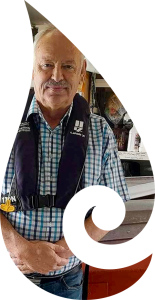
If anyone knows just how important that is, it’s Graham, who survived hours in the water after the boat that he and his son were fishing on capsized last summer in the Firth of Thames.
The Manurewa resident has been boating and fishing in Kawakawa Bay and surrounding areas his whole life and thought he’d pop out for a quick fish with his son David last March.
At about 6:30pm, as they were getting ready to head home, “an unlucky set of circumstances” began in which a wave swamped the boat just as Graham was pulling up anchor, at the same time, the boat turned and slipped onto it’s left side, it was upside down within seconds.
But being safety conscious boaties, Graham and David were wearing lifejackets which they inflated straight away.
With his cellphone now under water, Graham and his son tried righting the boat to no avail and so made the decision to stay with the boat until help arrived.
But as it grew darker and the current stronger, they made the decision to swim to Ponui Island, about 30 minutes away. “If we had stayed with the boat we would have ended up in the Firth of Thames!” Graham says.
At around midnight, after an intimidating and tiring swim, they lay down exhausted on the beach of Ponui Island, it was then they saw the police spotlight searching for them.
“We used our life jacket reflectors to catch their attention, they told us they put the lights out over the water to give us hope.”
While so many incidents like this can turn fatal, Graham and David’s did not due to their strong adherence to safety.
“To all boaties and rock-based fishers, lifejackets will save your life, wear them all the time you are out. What happened to us, happened so quickly there would have been no way I could have got the lifejacket on so you got to put them on the whole time you are out.” Graham says.
Now with his boat fully recovered, Graham is looking forward to heading out onto the water this summer. He’s not been deterred by his experience but has since purchased stabilisers for his boat and personal locator beacon.


One fine Sunday morning in November 2021, the family were at their home in Flat Bush. In a bid to stop her teenage sons from sleeping in all day, Radjeep accepted an invitation from a friend to join them for a walk in the Waitākere Ranges.
After the walk, Rajdeep, her husband Gurdeep, sons Manveer and Puneet, along with their friends, headed to Karekare Beach to rest and relax on the beach.
Despite it being early evening, and after the lifeguard patrol had finished, the boys decided to go for a quick swim. After some initial reluctance, Gurdeep decided to join them to keep an eye on his sons.
Both Rajdeep and Gurdeep grew up in India and had only swum in swimming pools. They were not very experienced with Auckland’s West Coast beaches. Radjeep describes her husband as “fit and strong” and her boys as “healthy and active”, both being involved in local football teams and swimming at North Shore and East Auckland beaches.
Not long after the boys, Manveer and Puneet, entered the water, they were caught in a rip and found themselves unable to touch the ground. Their dad swam out to assist but found himself in trouble too.
Fortunately, Shalema Wanden-Hannay, an off-duty lifeguard, spotted the family in trouble. By the time she was able to reach them, she found Gurdeep unconscious in the water and the two boys were encouraging each other to stay calm and stay above the water. Shalema was joined by fellow Karekare lifeguards and together managed to get the family back to the beach where they administered CPR. The boys were checked and monitored by St Johns Ambulance staff and Gurdeep was flown to Auckland Hospital by the Auckland Westpac Rescue Helicopter in a critical condition.
Gurdeep would spend ten days in hospital with a lung infection.
Once Radjeep arrived at the hospital, she recalls “Gurdeep was asking me about his boys, were they safe? It was the most important question to him. He asked me, have the boys drowned? I said no, he didn’t believe me. Police brought the boys to him, he didn’t believe me until he saw them in front of him,”
The whole family is full of praise for the Karekare lifeguards, police, St Johns Ambulance and rescue staff who helped on the day. They received counselling afterwards but it has still been a long road to recovery. Puneet was initially hesitant to return to the water but both boys have now been back to the beach helped in part by the water safety lessons Manveer took with the Karekare lifeguards. They are now actively promoting water safety within their Sikh community.
Rajdeep explained “We had never been taught about beach safety, rips and things like that. I would just say, swim between the flags, a lot of people go into the water after the flags have gone down and I want to educate them not to do that.”
~ Rajdeep Kaur, November 2021


Family friend Diane Lee remembers Changho as a laughing, friendly young man who was well-liked by the other students. He spent Christmas with Diane and her family where he excitedly told her of his parents upcoming visit to New Zealand and his plans to return to Korea soon after.
After Christmas, Changho visited Auckland with friends then returned to Hamilton on December 27th. On their return trip, he and his friends stopped at a swimming spot on Cambridge’s Lake Karapiro called Keeleys Landing. It is believed Changho jumped into the water with his friends, despite being unable to swim.
Diane still vividly remembers that night. “It was almost dark….it was raining… I got a phone call….. it was from New Zealand police. My heart broke and I did not know what to do. I still can’t forget the dizzying feeling of that night, Roger had left us just like that.”
In the days that followed, Changho’s parents arrived and police searched frantically for his body. Diane and his parents were present when he was found and they were able to gently transport him home to Korea.
Changho’s death left so many questions for his New Zealand friends. “He hated water so much, why did he jump from that high diving point? Did he make the mistake of thinking he was a good swimmer like his friends? Was he trying to blend into the surrounding atmosphere even with his unfamiliar knowledge of the water?” Diane wonders.
For many years Diane returned to Keeley’s Landing every Christmas to remember Changho and throw flowers into the water.
“Even now, New Zealand’s waters have swallowed up more young Koreans, I earnestly pray there will be no more sad news. I pray for that,” she says.

During a moment of distraction, Andy did not see Neko, then six years old, follow an older child into the deeper end of the pool. Suddenly, Neko was going under the water with his arms above his head, desperately trying to push off the bottom of the pool with his feet.
“I rushed to him so fast and beat the lifeguard who was closer to him,” Andy says.
The incident had a significant and long lasting impact on Neko and his attitude to water.
“It was really traumatic for while,” Andy explains. “He had been confident before but afterwards that confidence was gone. He would not go back in the water, in a pool or at the beach or even fishing. We went from going to the pools almost every weekend to not going at all.”
“I was really worried about it because I wanted him to enjoy water, especially as he got older, and I didn’t want him to miss out on doing things in the water with his friends.”
Six years later, Neko’s grandfather came across Drowning Prevention Auckland’s SPLASH holiday programme and Neko, with much hesitation, signed up at West Wave Pools this past April.
The Year Eight Rangeview Intermediate student loved the water competency course, learning a range of different water survival skills such as propulsion through the water, safe entry and exits, survival strokes and lifejacket use.
“The staff and the environment was so positive for him” Andy says. “No one talked down to him, they taught him on his level and made him feel more confident. They were able to push him and encourage him at his level. I wish I had done this course sooner”
Neko was named Most Improved Student at the end of the course and his dad has already noticed the impact of this. “He feels like he can now go in the deep end and not drown, he is so much more confident. Taking him to SPLASH is one of the best things I’ve ever done for my child.”
Neko is now a keen soccer player, representing Auckland at various age groups, but after the SPLASH programme he’s now feeling ready to swap the football field for the odd trip to the beach with his dad again this summer