News and Media
Media Enquiries
Please direct all media enquiries to Nicola Keen-Biggelaar, Chief Executive, on 021 541 222, nicola@dpanz.org.nz.
Discover drowning insights and water safety learning opportunities
On this page you will find statistics related to drowning fatalities, along with risk factors that lead to drowning. There is information about how to avoid trouble in, on and around the water, as well as what everyone should know how to do if they get into trouble in the water. You’ll also find links to learning opportunities both online, via our eLearning platform, as well as in person water safety courses. While you’re here, check out our latest news.
Drowning Fatalities
The numbers below show a snapshot of drowning fatalities for Tāmaki Makaurau Auckland and Aotearoa New Zealand since records began in 1980.
New Zealand 1980-2024
Auckland 1980
Auckland 2024
New Zealand 2024
High risks for Tāmaki Makaurau Auckland 2019-2023
The highest areas of risk for people in Tāmaki Makaurau Auckland are highlighted below by demographic, activity and environment.
Demographics
Adults, particularly 65 years and over, and especially males are most at risk of drowning.
%
Aged 65+
%
Male
%
Aged 25-65
%
Asian
%
Māori
%
Pacific Peoples
Activity
The three most common activities leading to drowning fatalities are; swimming, immersion (unintentional or unknown entry into the water), and boating.

Swimming
Auckland 33%

Immersion
Auckland 30%

Boating
Auckland 21%
Environment
The beach environment risk continues to grow in Tāmaki Makaurau Auckland. Tidal risk is higher than for the rest of Aotearoa New Zealand, with river risk lower than the rest of the country.

Beaches
Auckland 40%

Tidal waters
Auckland 17%

Rivers
Auckland 13%
How to avoid trouble in, on and around the water
All organisations within the water safety sector are behind the Water Safety Code which offers five ways to be safer when engaging with the water. Before you head out, make sure you are familiar with the code and are prepared in each of the points.
What everyone should know how to do if they get into trouble in the water
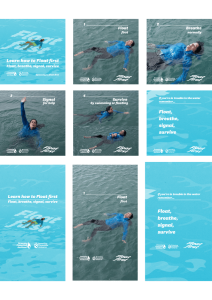
Float first! If you do find yourself in trouble in the water, whether you’ve fallen in, are caught in a strong current/rip, or otherwise feeling unsafe in the water, remember; float, breathe, signal, survive.
Learn how to keep yourself and your loved ones safer
Online modules
Our free online water safety modules for adults cover how to keep yourself safer while engaging in water-related activities, as well as how to develop the water safety skills, attitudes and behaviours of the tamariki (children) and rangatahi (youth) in your life so that they can also enjoy connecting with the water.
In person courses
We offer a range of in person learning opportunities for people of all ages and and level of activity to learn about water safety and improve their water competence.
Stories

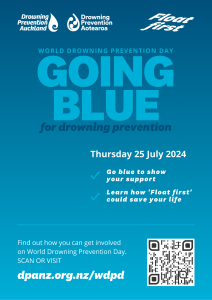
Grief and healing the focus of World Drowning Prevention Day, with dawn memorial planned for Tāmaki Makaurau
MEDIA RELEASE | 21 July 2022 A very special commemoration to honour those who have lost their lives to drowning is planned for Monday 25 July 2022. This event held at St Mary’s Bay, Tāmaki Makaurau, will provide healing for people who are grieving the loss of a...

Lifejacket Use and Maintenance
Calling Tāmaki Makaurau Auckland home means living in a city surrounded by many beautiful water environments. Recreational activities on or near the water are common, everywhere from our lakes and rivers, to our harbours and rugged west coast beaches. Along with the...

Spring Forum 2022
WHEN 1pm to 5pm, Tuesday 20 September, 2022 WHERE Hyundai Marine Sports Centre, 8/10 Tamaki Drive, Auckland RSVPTo isla.mcniel@dpanz.org.nz by Tuesday 13 SeptemberCome along to hear about:How research is informing the development of national PRE guidelines and how...

SUP Safety
Stand up paddle boarding is a popular activity for people of all ages and activity levels. This means that there is a wide range in the level of ability and confidence amongst paddle boarders. We want everyone to be able to safely enjoy this water sport which is great...

Rip Current Safety
Getting caught in a rip current is an all-too-common occurence at our surf beaches in Aotearoa, with tens of thousands of rescues taking place every year and many of the fatal drownings at beaches being directly related to rip currents. Over the last ten years, over...

From Splash Participant to Water Safety Ambassador
Kairo Jacobs came through the Splash Break-Away programme and is now a Water Safety Ambassador. Read his story about his initial reluctance and just how much he gets out of working within the community.“I first started the Splash Programme when I was around 12 years...

Water Safety Advisers Returning After Last Year’s Success
MEDIA RELEASE | 17 December 2021 With the arrival of warmer weather and the lifting of Covid-19 restrictions, more New Zealanders will be heading to their favourite watering hole for a picnic and a swim. Drowning Prevention Auckland (DPA) wants everyone to enjoy the...

Podcast: Recreation Diving – Lessons Learnt
In this podcast, Clayton Wikaira chats to his whanaunga about recreational diving safety and the lessons they've learnt through experience.

DPA Launches New Adult Water Safety eLearning Module
Drowning Prevention Auckland has launched a new eLearning module for adults which aims to address the gap between perception and reality when it comes to water competency. The objective is to help the higher risk group of older adults stay safe by improving their...