From Splash Participant to Water Safety Ambassador

From Splash Participant to Water Safety Ambassador

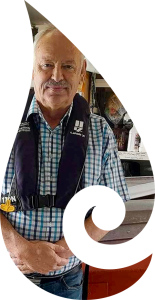
Kairo Jacobs came through the Splash Break-Away programme and is now a Water Safety Ambassador. Read his story about his initial reluctance and just how much he gets out of working within the community.
“I first started the Splash Programme when I was around 12 years old. I was reluctant to attend at first because not only was the programme unfamiliar to me but, no one I knew was going either. As daunting as it was, I can honestly say that I felt at home from the moment I arrived. Not only was the atmosphere warm and welcoming, but the instructors were fast to familiarise themselves with the kids and showed a genuine interest and love for what they were doing.

When the time came to search for casual employment in Year 12, I thought I would enquire about becoming a Water Safety Ambassador. Not only had I done the program a few times, but the Ambassadors seemed to really love what they do, and this is something that stuck with me. I have completed my first season as an Ambassador, and it has been an enjoyable experience being on the other side so far. Working in the community, teaching skills that will hopefully benefit the kids in the future or even help save a life is rewarding and not something you can find in any job. I never thought working with kids in the community was something I would be doing but now. I look forward to the next season”.

This is one of the ways we are committed to recognising “Water Safety Champions” within the areas of work we do. Kairo’s “why” emphasises the importance of recognising our “future water safety ambassadors” when delivering programmes such as Splash Break-Away.

Kairo is one of the few staff who have gained employment through doing Splash Break-Away. We are lucky to have him as part of our team, he brings his own knowledge around water safety, is passionate about teaching, and is relatable to the kids.

Thank you Kairo.

January Splash Break-Away registrations are open!

Click the button for more information and to register
Water Safety Advisers Returning After Last Year’s Success

Water Safety Advisers Returning After Last Year’s Success

MEDIA RELEASE | 17 December 2021
With the arrival of warmer weather and the lifting of Covid-19 restrictions, more New Zealanders will be heading to their favourite watering hole for a picnic and a swim. Drowning Prevention Auckland (DPA) wants everyone to enjoy the water but reminds people that waterfalls and waterholes pose dangers for swimmers.

DPA’s Chief Executive Nicola Keen-Biggelaar says: “We’re really pleased to be supporting the water safety adviser programme at Hūnua Falls again this summer. While the country’s waterfalls and waterholes are inviting, they are very unpredictable and unforgiving. Tragically, they have too often proved deadly.”

In the five years 2016-2020, there have been 14 drowning deaths in waterfalls in New Zealand. Since 2016, there have been three drowning deaths at Hūnua Falls – two in 2016 and one in 2019.

Over the past two summers water safety advocates and organisations have worked together to help prevent further drownings at the picturesque Hūnua Falls. Water Safety New Zealand, Auckland Council, Drowning Prevention Auckland, and YMCA North are funding advisers who will be on site to educate people about the dangers involved in swimming at the popular destination.

“An integral part of this water safety project is having water safety advisers at the falls from late December through to the end of January, Wednesday to Sunday, advising about on-site risks at Hūnua and recommending safe behaviours. Advisers are on site at Hūnua Falls from 22 December for the summer.” Says YMCA North’s, Group Manager Outdoors & Fundraising, Dave Lockwood.

The surveying of visitors by the water safety advisers revealed that while most people were visiting Hūnua Falls to look at the waterfall or walk a track, there is still more work required to help people know why waterfalls are dangerous and not recommended for swimming. The same survey revealed that over half (55%) of people were over-confident in their own swimming competence and thought it more likely that others would get into trouble rather than themselves.

Auckland Councillor and Parks, Arts, Community and Events Chairperson Alf Filipaina is pleased to see the water safety advisers returning this year. “Education is really important. Too many people have died at Hūnua Falls in the past and it needs to be repeated that the falls are dangerous and unsuitable for swimming.”

He believes that the on-site advisers have played a vital role with reducing drownings, both fatal and non-fatal.

“Having people there most days over the busy period is really helping. Not only are Aucklanders learning about the risks around waterfalls, but they are taking that message back to their communities and that is important. We want people to come and view the majesty of the falls, but we want them to stay safe and return home to their whānau / ‘aiga too.”

Nicola reminds people of the water safety code, which will help keep people safe around any type of water:

Be prepared

Check the weather forecast, the Safeswim website (www.safeswim.org.nz) and know the local environment. Set rules for safe play. Flooding can be prevalent after rain, causing strong currents and turbulent water.

Look out for yourself and others

Always supervise children around water and keep children under five years within arm’s reach; never swim alone and don’t pressure your friends to get into the water if they’re not confident.

Be aware of the dangers

It’s the unknown, what lies below the surface and not knowing the depth of the water. Slippery and submerged rocks, debris and underwater currents pose dangers. Sudden changes in depth together with slippery rocks may make it difficult for you to find your footing. Cold water will fatigue you. Get out of the water before you get tired.

Know your limits

Challenge yourself within your abilities and skill level; know what you can and can’t do in the water. Once again, don’t be pressured into going into the water if you can’t swim or aren’t confident.
“We urge everyone to think about water safety this summer. Enjoy the water but don’t over- estimate your abilities and under-estimate the risks. We are all responsible for keeping ourselves and our loved ones safe when we’re in, on and around water.” WSNZ’s Chief Executive Daniel Gerrard said.
DPA Launches New Adult Water Safety eLearning Module

DPA Launches New Adult Water Safety eLearning Module

Drowning Prevention Auckland has launched a new eLearning module for adults which aims to address the gap between perception and reality when it comes to water competency. The objective is to help the higher risk group of older adults stay safe by improving their competence, skills and understanding through effective preparation.

The ‘Water Safety for Adults’ component is available online to anyone in Aotearoa New Zealand. It is completely free as part of the DPA eLearning platform. The module covers how to assess personal competence in and around water and gives important tips and information about how to be safer when participating in water-based activities, particularly in open water environments.

Research findings show that adults perceive that they are more competent in water than they actually are, especially in open water. This gap between perception and reality leads to an increased risk of drowning. This comes from doctoral research completed by Teresa Stanley earlier this year. “The problem isn’t that people can’t swim or float, but they can’t swim or float as well as they think they can in open water” states Stanley.

“We are thrilled to be expanding our eLearning platform to be relevant and accessible to those that need to learn and grow their water competency the most. The more we can do to grow knowledge that changes attitudes and behaviours, the safer our community will be recreating in, on and around the water” says Nicola Keen-Biggelaar, Chief Executive of Drowning Prevention Auckland.

“We’d like to thank The Lion Foundation for their support in developing this module, particularly given some of the constraints we have as a society in educating face-to-face.”

If you, or someone you love, is planning to participate in open water activities such as boating, swimming, kayaking, paddling, surfing, or snorkelling this summer, take some time to complete this module.

Free adult water safety elearning module

Complete the Adult Water Safety e-Learning module.

Diving Safety Podcast 2

Diving Safety Podcast 2

Clayton continues his tips for safe diving practices, this time focusing on the importance of having the correct gear and how it can help keep you safe while you are diving.
Diving Safety Podcast 1

Diving Safety Podcast 1

Aquatic Educator Clayton Wikaira presents this podcast which draws safety tips and information from his 30+ years of experience diving for kaimoana.

Watch to hear about Clayton’s own close call and learn how to stay safe while free diving for kai.

The West Coast Rock Fishing Safety Project

The West Coast Rock Fishing Safety Project

The West Coast Rock Fishing Safety project is a programme to help educate rock fishers on how to keep themselves and others safer when rock fishing. This project began in 2006 due to a spate of rock fishing fatalities on Auckland’s West Coast in 2005 (5 drownings in 4 months) which needed immediate attention to prevent further drownings.

This year will see the West Coast Rock Fishing Safety project head in to its sixteenth year and the longevity to this is based on effective collaboration by Auckland Council, Drowning Prevention Auckland and Surf Life Saving Northern Region.

The project focuses on the interventions aimed at reducing rock-based fishing fatalities and promoting a safety culture among this high-risk group of aquatic recreationalists.

With the inclusion of an Asian aquatic educator to DPA we are able to purposely target Chinese and Korean rock fishers who have been identified to have the highest representation of fishers on Auckland’s West Coast and unfortunately have the highest number of rock fishing fatalities. As Covid-19 is still playing a major role in how we live and the unfortunate increase in job losses, more families may be under pressure financially and therefore seek new ways to source food. Rock fishing may become a more viable option with this activity which only requires a fishing rod, bait and somewhere to fish.

Anecdotally, over the lockdown periods in 2020 (March – May and August) there had been an increase in fishing activity on the West Coast, further increasing the risk of drowning highlighting the importance of the West Coast Rock Fishing Safety project.

Check out the findings of the 2021 West Coast Rock Fisher Safety Report

Key messages when rock fishing:

Z

Be prepared

Z

Watch out for yourself and others

Z

Be aware of the dangers

Z

Know your limits

Z

Most importantly

Assess your own ability to cope with risk and always wear a lifejacket
PLD: Teaching Aquatics – Are You Up To Speed?

PLD: Teaching Aquatics – Are You Up To Speed?

A professional learning opportunity for ALL aquatic education teachers in primary and secondary schools. This one-day workshop will focus on current evidence-based practice in aquatic education and will include FREE in-school support.
Jumping into lake
If aquatic education is to be consistently offered in schools it is the classroom teacher who is best placed to provide this.
(Lynch, 2012)

Competencies developed through (swim) schools are not necessarily applied in a natural aquatic environment .
(Baker, 2019)

Teaching Aquatics

Are you up to speed?

Venue: NZ Marine Conference Room, 85 Westhaven Drive
Date: TBC, 2022
Time: 8.30am – 3.30pm
Cost: $50 + GST
(To contribute to costs including refreshments. This PLD is subsidised from various funding sources.

All people are at risk of drowning, the problem is not so much that people are unable to swim or float, but they are unable to swim or float as well as they thought they could in open water.
(Stanley, 2021)

Course Outline

Developing our competence to teach aquatic education will be unpacked in 3 ways:

Exploring The Theory

  • Drowning prevention education is based on development of 15 competencies
  • Understanding the drowning problem
  • What are we doing now?
  • What could/should we be doing?

Pool (practical)

  • Personal competencies for drowning prevention.
  • Great activities for in the pool learning (yours and ours)

Open water environments (‘Dry’)

  • Ideas for developing 15 water competencies in open water
  • Safety management processes for teachers and students

In New Zealand, people of Māori and Pacific Islander ethnicity record higher drowning rates compared with the European population.

(Willcox-Pidgeon et al., 2019)

Swimming is learned indoors while drowning happens primarily outdoors .
(Stallman et al., 2008)

Watch the DPA Mid-Winter Forum Online

Watch the DPA Mid-Winter Forum Online

We’re pleased to be able to share with you the presentation that Teresa Stanley gave at our 2021 Mid-Winter Forum.

Perceived and Real Water Competency and Drowning Risk Among Adults in Open Water: A Wicked Problem

Teresa’s Powerpoint presentation contained a wealth of information and facts discovered during her doctoral research. Please feel free to download this resource.
Mid-Winter Forum Thursday 10 June 2021

Mid-Winter Forum Thursday 10 June 2021
Perceived and Real Water Competency and Drowning Risk Among Adults in Open Water: A Wicked Problem

Join us for our 2021 mid-Winter Form, where this year we are excited to share Teresa Stanley’s journey of research and the doctorate she has achieved. The findings of this thesis have implications for all drowning prevention education to keep people safe in open water.
Come along to hear about the far-reaching benefits we believe this has for the water safety sector. We look forward to sharing this with you.

Please RSVP to info@dpanz.org.nz by clicking the button below.

Drowning Prevention Model by Teresa Stanley

Thursday 10 June, 3pm – 5pm

Drowning Prevention Auckland
85 Westhaven Drive
Auckland

New Lifejacket Hub – Bethells SLSC

New Lifejacket Hub – Bethells SLSC

Our latest lifejacket hub is now established in partnership with Bethells Surf Lifesaving Club.  This is in response to our Rock Fishing project and our knowledge that many fishers still do not wear life jackets.  One of the barriers to wearing lifejackets is the cost. The intention of the lifejacket hub is to give people access to lifejackets at no cost, or for a gold-coin donation if they wish.

We also have many other lifejacket hubs across Auckland where you can loan a lifejacket for yourself or group for up to two weeks at a time free of charge. Click to find a lifejacket hub close to you.

Many thanks to Maritime New Zealand whose funding enabled the establishment of these hubs.

Recently, two fishermen went fishing at 5am in the morning with no lifejackets and wearing unsuitable clothing. It was still dark outside and they used head torches to navigate around the rocks at South Piha, on Auckland’s West Coast. The surf conditions on this day were not suitable for fishing from the rocks, with 3m plus swells hitting the coastline and strong onshore winds generating further swell.  As they navigated the dark and large waves surging up against the rocks, one fisherman fell into the water and drowned, presumably due to the large surf conditions and lack of a lifejacket that could have otherwise provided flotation. The callout squad from SLSNR was notified just after 5am and a land-based only search was conducted as conditions were unsuitable for lifeguards to attempt an in-water search.

With compassion for the family, we would like to highlight that fisher drownings are preventable and can be avoided by following key safety messages;

Z

Check Weather and Tides

Z

Wear Suitable Clothing

Z

Wear a Lifejacket

Drowning Prevention Auckland, Surf Life Saving Northern Region and Auckland Council are delivering their 15th year of the West Coast Rock Fishing project. This collaborative programme provides further education, awareness and workshops on Rock Fishing safety for our communities. Please contact Harry if you have a group interested to learn more: Harry.Aonga@dpanz.org.nz

Engaging Newly Settled New Zealanders in Water Safety

Engaging Newly Settled New Zealanders in Water Safety

At the end of March one of our Aquatic Educators, Leilani Fuemana, presented at the Virtual Pre-Conference Global Injury Prevention Showcase for 2021. Drowning prevention was a key focus of the showcase.

Leilani talked to participants about Drowning Prevention Auckland’s work in ‘Engaging Newly Settled New Zealanders in Water Safety’. Leilani was one of four presenters who showcased in the drowning factors session. Other presenters represented: Surf Lifesaving Australia, Royal Life Saving Society and Water Safe New Zealand.

To engage with newly settled New Zealanders we use the three guiding principles of Te Tiriti o Waitangi: Partnerships, Participation and Protection. Engaging newly settled New Zealanders in water safety is a high priority for us. We know that Tāmaki Makaurau is one of the world’s most culturally diverse cities with over a quarter of residents (28%) identifying with one or more Asian ethnic groups. The issue we face is that over a quarter (27%) of Tāmaki Makaurau’s preventable drownings from 2015-2019 identify as Asian or Other. 

Click below to watch Leilani as she shares about the ‘Gender Specific Water Competence Programme’ that was created for women that contributes to reducing this disparity while giving all woman an opportunity to learn how to become more water competent.