News and Media
Media Enquiries
Please direct all media enquiries to Nicola Keen-Biggelaar, Chief Executive, on 021 541 222, nicola@dpanz.org.nz.
Discover drowning insights and water safety learning opportunities
On this page you will find statistics related to drowning fatalities, along with risk factors that lead to drowning. There is information about how to avoid trouble in, on and around the water, as well as what everyone should know how to do if they get into trouble in the water. You’ll also find links to learning opportunities both online, via our eLearning platform, as well as in person water safety courses. While you’re here, check out our latest news.
Drowning Fatalities
The numbers below show a snapshot of drowning fatalities for Tāmaki Makaurau Auckland and Aotearoa New Zealand since records began in 1980.
New Zealand 1980-2024
Auckland 1980
Auckland 2024
New Zealand 2024
High risks for Tāmaki Makaurau Auckland 2019-2023
The highest areas of risk for people in Tāmaki Makaurau Auckland are highlighted below by demographic, activity and environment.
Demographics
Adults, particularly 65 years and over, and especially males are most at risk of drowning.
%
Aged 65+
%
Male
%
Aged 25-65
%
Asian
%
Māori
%
Pacific Peoples
Activity
The three most common activities leading to drowning fatalities are; swimming, immersion (unintentional or unknown entry into the water), and boating.

Swimming
Auckland 33%

Immersion
Auckland 30%

Boating
Auckland 21%
Environment
The beach environment risk continues to grow in Tāmaki Makaurau Auckland. Tidal risk is higher than for the rest of Aotearoa New Zealand, with river risk lower than the rest of the country.

Beaches
Auckland 40%

Tidal waters
Auckland 17%

Rivers
Auckland 13%
How to avoid trouble in, on and around the water
All organisations within the water safety sector are behind the Water Safety Code which offers five ways to be safer when engaging with the water. Before you head out, make sure you are familiar with the code and are prepared in each of the points.
What everyone should know how to do if they get into trouble in the water
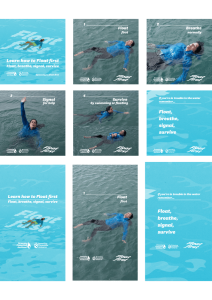
Float first! If you do find yourself in trouble in the water, whether you’ve fallen in, are caught in a strong current/rip, or otherwise feeling unsafe in the water, remember; float, breathe, signal, survive.
Learn how to keep yourself and your loved ones safer
Online modules
Our free online water safety modules for adults cover how to keep yourself safer while engaging in water-related activities, as well as how to develop the water safety skills, attitudes and behaviours of the tamariki (children) and rangatahi (youth) in your life so that they can also enjoy connecting with the water.
In person courses
We offer a range of in person learning opportunities for people of all ages and and level of activity to learn about water safety and improve their water competence.
Stories

New eLearning module for parents and caregivers of under fives
Concerted efforts in education for parents and young children, together with legislation around pool fences and barriers have significantly reduced drowning in children aged under five-years. However, under-fives still comprise 6% of preventable drowning fatalities...

Manawa Makes a Splash
Manawa means heart in Te Reo Māori and “our heart” is what Manawa Harrison, 17, is to his friends and whānau. Manawa’s journey has not been an easy one. He was diagnosed at a young age with Autism, ADHD, SPD and mild Tourette Syndrome. He had trouble focusing in...

Aquatic WOF Check
Regular assessment of water competency is essential for everyone regardless of age, experience or background. Being water competent includes not just the ability to swim, but also the understanding of what to do to be safe around water, how to respond in an emergency,...

Water Competency Sessions
Adult drowning rates in New Zealand are increasing. Research has found that this is likely for a number of reasons: Lack of water safety practice Entrenched unsafe attitudes toward open water participation Underestimation of risks in aquatic activity Overly optimistic...

Community Water Safety Education
Highlights from our April activity including Wai Wise, a global drowning prevention event at Vector Wero Whitewater Park and the new one-day SPLASH holiday programme.Wai Wise ProgrammeOne of DPA’s flagship programmes, Wai Wise, ran for the first time with Auckland’s...

Kāhui Ako Conference – ‘Together We Are Stronger!’ (Massey Schools Cluster)
The recent Kāhui Ako Conference for the Massey Schools Cluster brought together educators of all levels, from early childhood to secondary school for a day of connection and learning. Held on the first day of term two, the event was a rare chance for teachers and...

How’s Your Workplace Water Competency?
Drowning Prevention Auckland partners with workplaces around Tāmaki Makaurau Auckland and further afield to offer their employees invaluable water safety training. Whether your organisation works directly or indirectly in a water-based environment, a Water Competency...

Realising Wai Ora Tāmaki Makaurau
Realising Wai Ora Tāmaki Makaurau – Auckland’s Drowning Prevention and Water Safety Strategy What are the top priorities?A year and a half on from the first sector hui for Wai Ora Tāmaki Makaurau - Auckland's Drowning Prevention and Water Safety Strategy, we bring you...

2022 Spring Forum Overview
In September our Spring Forum brought together sector leaders, research, and industry experts to share and discuss some of the key findings arising from PRE research and related water safety projects. Dr Kevin Moran, DPA set the scene around the problems and practices...