No two days the same for Aquatic Educator

No two days the same for Aquatic Educator

No two days the same: A month in the life of an Aquatic Educator

When people think about water safety education, they often picture someone standing poolside, teaching basic swimming and survival skills. For Aquatic Educator Danika Ryland-Higgins, it looks very different.

This story is a snapshot of just one month in Danika’s life as an educator with Drowning Prevention Auckland. In that time, she might teach pool lifeguards and engineers, support refugee communities, work with rangatahi in the ocean, and visit yacht clubs and community events. Much of this happens in the water, outdoors and on the move, and almost never behind a desk.

Before joining DPA, Danika was a First Aid Instructor with New Zealand Red Cross. She has long been at home in, on and under the water as a surf lifeguard, competitive swimmer, free diver, fisher and scuba diver. That mix of skills means she is just as comfortable coaching confidence in the deep end as she is supporting people through their first ever experience of Aotearoa New Zealand’s waterways.

Early one morning you will find Danika at a pool before opening hours, running an aquatics-based first aid session for lifeguards and pool staff.

Across a focused workshop, she helps teams refresh critical skills such as CPR, using a defibrillator and responding calmly when something goes wrong in or beside the water. The goal is simple: when an emergency happens, staff feel ready, not rattled. The same principles apply in workplaces where people spend time in, on or around the water. From staff who supervise aquatic activities to teams whose work takes them near waterways, Danika helps people understand risks, recognise trouble early and respond effectively.

Another day, she might be at Wero Whitewater Park, a controlled river environment in Tāmaki Makaurau, working with a team whose job brings them close to fast-moving water.

Here, the focus is on survival and helping each other if someone ends up in the river unexpectedly. Participants learn how to stay calm and Float first, move with the water rather than fight it, and use simple rescue techniques to support teammates from the safety of the bank. It is physical, practical and eye-opening, especially for people who have not experienced cold, fast water before.

The next week, Danika may be standing in front of 84 refugees at the Māngere Refugee Resettlement Centre, supported by a team of 12 translators.

Many of the people in the room have come from landlocked countries or have never been to a beach. Danika adapts her teaching style by slowing down, shortening sentences and using stories and demonstrations so that key safety messages are clear in every language. She knows this work may save lives. For people who are new to Aotearoa New Zealand, understanding rip currents, unexpected immersion and how to get back to safety can be the difference between a close call and a tragedy.

Outside of the resettlement centre, you will find her with community groups across the city in yacht clubs, faith communities, corrections facilities and more, tailoring “Be Water Safe” workshops to each audience.

Danika also spends some days supporting our team to deliver RUKU: Tau ihu in the open water with rangatahi at Te Kohuroa Mathesons Bay.

Here, water safety is woven together with connection to place and respect for te taiao. Rangatahi experience the ocean directly, learning to Float first, understand their own abilities and build confidence in, on and around the moana.

When she is not in a pool, river, classroom, or bay chances are Danika is out in the community at events and festivals such as Splashy Bikers Nature Day or Have a Throw Day, chatting with tamariki, whānau and community members at the DPA stand. It is all part of the same mission: helping more people enjoy Aotearoa New Zealand’s waters safely, for life.

We regularly hear feedback like:

My instructor was attentive, informative, and accommodated all our needs while encouraging us to challenge ourselves.

That balance of being supportive and stretching people just enough is at the heart of how Danika and our aquatic education team work.

If you are a workplace wanting to keep your people safe around water, or a community group keen to build water confidence and skills, our team can help.

Learn more about workplace training and book.

Explore Be Water Safe for community groups and enquire.

With Aquatic Educators like Danika on the job, one thing is for sure: even in a single month, no two days, and no two groups, are ever the same.

Do you have what it takes to be an Aquatic Educator?

We’re hiring! Click to find out more about the role and apply today.

Other news

World first lifejacket initiative

World first lifejacket initiative

Lifejackets accessible at high-risk location in world first initiativeAt the end of November, Drowning Prevention Auckland (DPA) installed a remote Lifejacket Station at Te Henga Bethells Beach in partnership with local iwi Te Kawerau ā Maki. In this global first of...

Summer pool safety

Summer pool safety

Take five minutes today - it might save a life tomorrowSummer’s here and that means long days, warm nights, and plenty of time in the pool. But, each summer, New Zealand families are devastated by preventable drownings in home pools. In Aotearoa New Zealand, an...

We All Play a Part this Water Safety Month

We All Play a Part this Water Safety Month

We All Play a Part This Water Safety Month


November is New Zealand’s Water Safety Month, and this year’s theme is “We All Play a Part”.

Water Safety New Zealand will shine a spotlight on the contributions of individuals, whānau, and communities in drowning prevention efforts across the motu. They’ll feature local champions, including surf clubs, fishing clubs, iwi, schools, and community groups.

Drowning Prevention Auckland (DPA) will also join in. In fact, this blog is all about the education, research and advocacy work we can achieve when we work together.

So, let’s take this time to acknowledge and celebrate our collaborations with sector partners, iwi, community groups, marae, and retailers. The support of others means we can offer low-cost and free resources and programmes to reach the most at-risk communities.

Together, we can all make a difference and create a stronger water safety culture in Tāmaki Makaurau Auckland and beyond – so that everyone can enjoy the water and return home safely.

Float first: sharing a lifesaving message that’s simple to remember and backed by research

Thanks to the support of our sector partners, Coastguard Tautiaki Moana, Surf Life Saving NZ, Maritime NZ, and New Zealand Search and Rescue, DPA developed the Float first survival steps (building on the RNLI’s Float to Live campaign and research by the University of Portsmouth).

Working together, we’ve been sharing this lifesaving message across Aotearoa New Zealand as part of World Drowning Prevention Day over the last four years.

Float first has become central to our messaging, and for good reason. In moments of difficulty in the water, many panic or attempt to swim, immediately increasing their risk of cold-water shock, exhaustion and drowning.

Instead, if you float, your body has the chance to calm down, save energy, and signal for help.

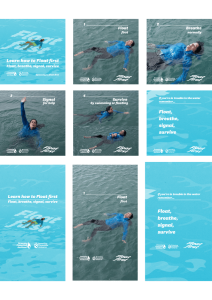
If you find yourself in trouble in the water, follow the four steps of Float first – float, breathe, signal, survive.

You can read more about Float first and watch a video demonstrating the four steps here.

Fishing safely from the rocks: Celebrating a 20-year partnership with Surf Life Saving Northern Region and Auckland Council

Thanks to an incredible partnership with Surf Life Saving Northern Region and Auckland council, we celebrated an amazing milestone this year: 20 years of our West Coast Rock-Based Fishers project.

As part of this project, we’ve been researching and tracking activity, behaviours and attitudes among rock-based fishers. This research allows us to deliver targeted and culturally appropriate education to keep people fishing from the rocks and land safe.

We continue to connect with the fishing community. We’re now working with New Zealand Sport Fishing Council and have a full-time advisor at Auckland’s West Coast beaches.

In recent years, with thanks to Auckland Council, we’ve been able to expand our impact by creating and sharing digital and printed materials based on the five tips of the Water Safety Code. We’ve also delivered educational sessions to reach at-risk communities.

Read more about rock-based fishing.

DPA Lifejacket Hubs: Partnering with the community to improve access

Like following the four steps of Float first, wearing a correctly fitted lifejacket – that’s in good condition – can mean the difference between life and death.

That’s why we partner with community-based organisations to make it easier for people to borrow free, well-fitted lifejackets, whether that’s for rock-based fishing, boating, kayaking or something else. These hubs are especially important for families and groups who may not be able to afford or store their own safety gear.

We have nine locations across Tāmaki Makaurau Auckland, as well as three hubs across the country – Glenorchy, Whangamatā and Waikato.

View all the DPA Lifejacket Hub locations here and please take the time to fill out our Lifejacket Use Survey after you borrow a lifejacket. The information you supply helps us provide evidence for funding accountability reports and new funding applications to enable us to maintain our Lifejacket Hubs.

The Water Safety Code: A five-step framework to make better decisions

As part of our advocacy work, we’ve developed the Water Safety Code alongside our sector partners, Surf Life Saving NZ, Maritime NZ, Water Safety New Zealand, and New Zealand Search and Rescue.
The Water Safety Code was a collaborative effort to develop five simple tips to help everyone stay safe and make good decisions in, on and around water – regardless of location or activity.
The five tips – designed to be easy to remember and share – are:

  1. Know how to float
  2. Find the safest place
  3. If in doubt, stay out
  4. Take care of yourself and others
  5. Know how to get help

If you’d like to download Water Safety Code posters (available in English and te reo Māori) and share these important messages with your friends, whānau and workplace, please visit this link.

RUKU: Tau Ihu. A hugely popular initiative co-created with Rihari Wilson of Te Ahiwaru Trust

Across all our education, research and advocacy initiatives, we’re focused on upholding Te Tiriti o Waitangi and being a responsible treaty partner.

One way we do this – while reaching an at-risk population – is through the highly popular RUKU: Tau Ihu programme.

Now in its third year, RUKU: Tau Ihu, co-created by Rihari Wilson of Te Ahiwaru Trust and DPA’s Ants Lowe, is oversubscribed. Around 200 rangatahi completed the programme last year, and we’ve now got a waitlist.

RUKU brings together theory, in-pool sessions and open-water dives to teach rangatahi how to be safe in the water, while connecting or reconnecting them with mātauranga Māori (Māori worldview, values and culture).

Be Water Safe: Connecting with marae, schools and community centres

A programme which is especially impactful for new migrants and international students – groups who are often unfamiliar with our unique aquatic environments – Be Water Safe is about accessing free or low-cost water safety education.

Thanks to connections through schools, community centres and marae, Be Water Safe allows us to reach people who are at risk of drowning. These short and informative sessions focus on building respect for the water, understanding local risks, and learning how to make safer decisions in, on and around water.

We’re thrilled to share that sessions are now available in-person in Tāmaki Makaurau Auckland.

We’d love for you to get in touch if you’re interested in booking an in-person or digital session.

Want to play your part?

We all have a part to play in keeping ourselves and each other safe in, on and around the water.

A great place to start is Be Water Safe.

Please get in touch to find out more and to book a Be Water Safe session for your community.

Water Safety New Zealand now have resources for this year’s campaign available – including a digital sticker that you can share on social media. We encourage you to share your stories or shine a light on individuals or groups contributing to water safety using the hashtag #weallplayapart.

Other news

World first lifejacket initiative

World first lifejacket initiative

Lifejackets accessible at high-risk location in world first initiativeAt the end of November, Drowning Prevention Auckland (DPA) installed a remote Lifejacket Station at Te Henga Bethells Beach in partnership with local iwi Te Kawerau ā Maki. In this global first of...

Summer pool safety

Summer pool safety

Take five minutes today - it might save a life tomorrowSummer’s here and that means long days, warm nights, and plenty of time in the pool. But, each summer, New Zealand families are devastated by preventable drownings in home pools. In Aotearoa New Zealand, an...

Be Water Safe

Be Water Safe

A short education session designed to give participants the essential water competence knowledge and understanding they need to feel more confident and safely enjoy everyday situations at the beach, pool, or near water in your community.

Key points covered in the session are:

  • Snapshot of the 15 water competencies for drowning prevention
  • Float first survival response
  • Using lifejackets
  • Access to free resources or opportunities to further develop knowledge and skills.

Choose a 15, 30, or 60 minute session.

Other news

World first lifejacket initiative

World first lifejacket initiative

Lifejackets accessible at high-risk location in world first initiativeAt the end of November, Drowning Prevention Auckland (DPA) installed a remote Lifejacket Station at Te Henga Bethells Beach in partnership with local iwi Te Kawerau ā Maki. In this global first of...

Summer pool safety

Summer pool safety

Take five minutes today - it might save a life tomorrowSummer’s here and that means long days, warm nights, and plenty of time in the pool. But, each summer, New Zealand families are devastated by preventable drownings in home pools. In Aotearoa New Zealand, an...

DPA Aquatic WOF – Building competence and confidence

DPA Aquatic WOF – Building competence and confidence

Learning to stay safe in and around water is important for everyone, regardless of age or ability. The Aquatic Warrant of Fitness (Aquatic WOF) Check from Drowning Prevention Auckland is a free, one-hour session that helps people understand their current water skills and build competence and confidence through practical activities like floating, deep-water exits, and swimming while wearing a lifejacket.

In the story below, one participant shares how the Aquatic WOF helped them move from being afraid of water to feeling more capable and confident in the sea and in swimming pools. Their experience is a great reminder that regularly testing your ability in the water is key to staying safe and prepared, especially as ability and fitness changes over time.

Leo’s story: From fear to confidence – Three years of Aquatic WOF

I had been afraid of water since childhood. I never went to swimming pools and always stayed well away from the sea.

A few years ago, I met my girlfriend, who is an able swimmer. One day we went to the beach at Tāwharanui, and she encouraged me to try bodyboarding in the safe swimming zone. To my surprise, I immediately enjoyed the feeling of the sea waves pushing me forward. That moment sparked something in me, and I began to seriously consider learning how to swim.

I started with a few group lessons at Tepid Baths in Auckland CBD and practiced on my own after each session. Over time, I improved and could swim freestyle quite well, but deep water still scared me. That was when I discovered the Drowning Prevention Auckland (DPA) Aquatic Warrant of Fitness (Aquatic WOF) programme.

I first participated in the 2023 and 2024 Aquatic WOF sessions. The instructors were incredibly supportive and helped me build confidence in the water. I learned essential skills such as deep-water exits, floating on my back, wearing a life jacket, and swimming as far as I could in five minutes. I remember only managing about 100 metres at first.

Recently, I attended the 2025 Aquatic WOF, and the tips and advice from Josh really made a difference. I discovered that the “X” floating technique works best for me to stay afloat for long periods, which is crucial if I ever need to wait for help in open water. I also learned how to put on a life jacket quickly and comfortably.

The biggest surprise was my improvement. I managed to swim 200 metres in five minutes. A great tip from Josh was to conserve energy by switching between swimming styles. I swam the first 50 metres freestyle, then alternated between backstroke and freestyle for the rest.

The Aquatic WOF programme has completely changed my relationship with the water. I now have the confidence, competence, and practical skills that I know could save my life.

Other news

World first lifejacket initiative

World first lifejacket initiative

Lifejackets accessible at high-risk location in world first initiativeAt the end of November, Drowning Prevention Auckland (DPA) installed a remote Lifejacket Station at Te Henga Bethells Beach in partnership with local iwi Te Kawerau ā Maki. In this global first of...

Summer pool safety

Summer pool safety

Take five minutes today - it might save a life tomorrowSummer’s here and that means long days, warm nights, and plenty of time in the pool. But, each summer, New Zealand families are devastated by preventable drownings in home pools. In Aotearoa New Zealand, an...

DPA launches evidence-based inland water safety guidelines to help save lives

DPA launches evidence-based inland water safety guidelines to help save lives

Drowning Prevention Auckland / Aotearoa (DPA) is proud to announce the official release of our new Water Safety Signage and Public Rescue Equipment Guidelines for Inland Waters. These nationally significant guidelines are the first of their kind in Aotearoa, offering land managers, councils, iwi, and community leaders practical, research-informed tools to help prevent drownings in Aotearoa’s inland waters including: inner harbour beaches, rivers, lakes, tidal estuaries, ponds and swimming holes. This initiative complements the guidelines produced by SLSNZ for coastal beaches.

These tools include:

  • Clear signage
  • Fit-for-purpose public rescue equipment (PRE)
  • Practical, life-saving solutions tailored for inland water environments

This new resource represents years of research, site assessments, and community collaboration, all aimed at keeping people safe near the wai.

Why inland water safety matters

Beaches often dominate public conversations about water safety; inland waterways account for a significant proportion of drowning fatalities in New Zealand. Inland sites can be especially hazardous, with strong currents, sudden drop-offs, hidden snags, and limited access or exit points. Without lifeguards on duty at most inland locations, these risks can easily catch people off guard.

DPA’s new guidelines respond to this risk by providing land managers and local leaders with tools to act proactively; not reactively.

Introducing DPA’s Inland Water Services

To support the implementation of these new guidelines, DPA offers a comprehensive range of inland water consultancy services available across New Zealand.

Our team of experts can assist with:

  • Inland Water Hazard Assessments
    Site-specific evaluations to identify risks and develop practical safety recommendations.
  • Signage and PRE Planning
    Guidance on compliant water safety signage (AS/NZS 2416:2010) and public rescue equipment suited to local conditions.
  • Community Drowning Profiles
    Data-informed reports using activity data, drowning statistics, and demographic insights to support targeted interventions.
  • Local Water Safety Plans
    Strategic safety frameworks co-developed with councils, iwi, hapū, and user groups.
  • Community Education and Training
    Hands-on training sessions and “Have a Go” events covering bystander rescue skills and proper use of public rescue equipment.

The power of PRE: Simple tools, life-saving outcomes

Everyday people are often the first to respond in a water emergency. In fact, 14% of New Zealand adults report having attempted a water rescue (Omnipoll, 2024). That’s why DPA recommends placing clear signage and public rescue equipment at high-risk inland water locations.

Effective public rescue equipment:

  • Provides flotation for the person in distress
  • Keeps rescuers safer
  • Is visible and intuitive to use
  • Must be maintained and paired with hazard signage

Let’s work together

Whether you manage a reserve, a quarry lake, a rural stream, river, tidal beach, pond, or an urban swimming hole, we’re here to help. Our team supports evidence-based, culturally grounded best practice solutions that reduce risk and save lives.

Together, we can help more people enjoy the water and make it home safely.

Get in touch

Want to learn more about how we can help? Reach out to our team:

  • Email: consultancy@dpanz.org.nz
  • Phone: 09 376 5114
  • Visit us: 85 Westhaven Drive, St Marys Bay, Auckland 1010

We’re always happy to kōrero about improving water safety in your community.

Other news

World first lifejacket initiative

World first lifejacket initiative

Lifejackets accessible at high-risk location in world first initiativeAt the end of November, Drowning Prevention Auckland (DPA) installed a remote Lifejacket Station at Te Henga Bethells Beach in partnership with local iwi Te Kawerau ā Maki. In this global first of...

Summer pool safety

Summer pool safety

Take five minutes today - it might save a life tomorrowSummer’s here and that means long days, warm nights, and plenty of time in the pool. But, each summer, New Zealand families are devastated by preventable drownings in home pools. In Aotearoa New Zealand, an...

Celebrating 30 Years of Impact: DPA Anniversary Book

Celebrating 30 Years of Impact: DPA Anniversary Book

We’re proud to introduce WAI’s History and Impact 1994–2024: Celebrating 30 Years of Education, Research and Advocacy in Drowning Prevention.

This publication is part of documenting our whakapapa – honouring our journey and the many thought leaders who have shaped our work over three decades. Their vision and dedication have left a lasting mark on drowning prevention in Tāmaki Makaurau Auckland, Aotearoa New Zealand, and beyond.

We would like to acknowledge the integral support of our funders throughout the years, especially Auckland Council through the Auckland Regional Amenities Funding Board (ARAFB), whose commitment has helped make this legacy possible.

This book stands as a testament to the collective effort behind three decades of progress in drowning prevention.

Together, we honour the past, celebrate the present, and prepare for the future.

Read the book

Read about our whakapapa online.

Other news

World first lifejacket initiative

World first lifejacket initiative

Lifejackets accessible at high-risk location in world first initiativeAt the end of November, Drowning Prevention Auckland (DPA) installed a remote Lifejacket Station at Te Henga Bethells Beach in partnership with local iwi Te Kawerau ā Maki. In this global first of...

Summer pool safety

Summer pool safety

Take five minutes today - it might save a life tomorrowSummer’s here and that means long days, warm nights, and plenty of time in the pool. But, each summer, New Zealand families are devastated by preventable drownings in home pools. In Aotearoa New Zealand, an...