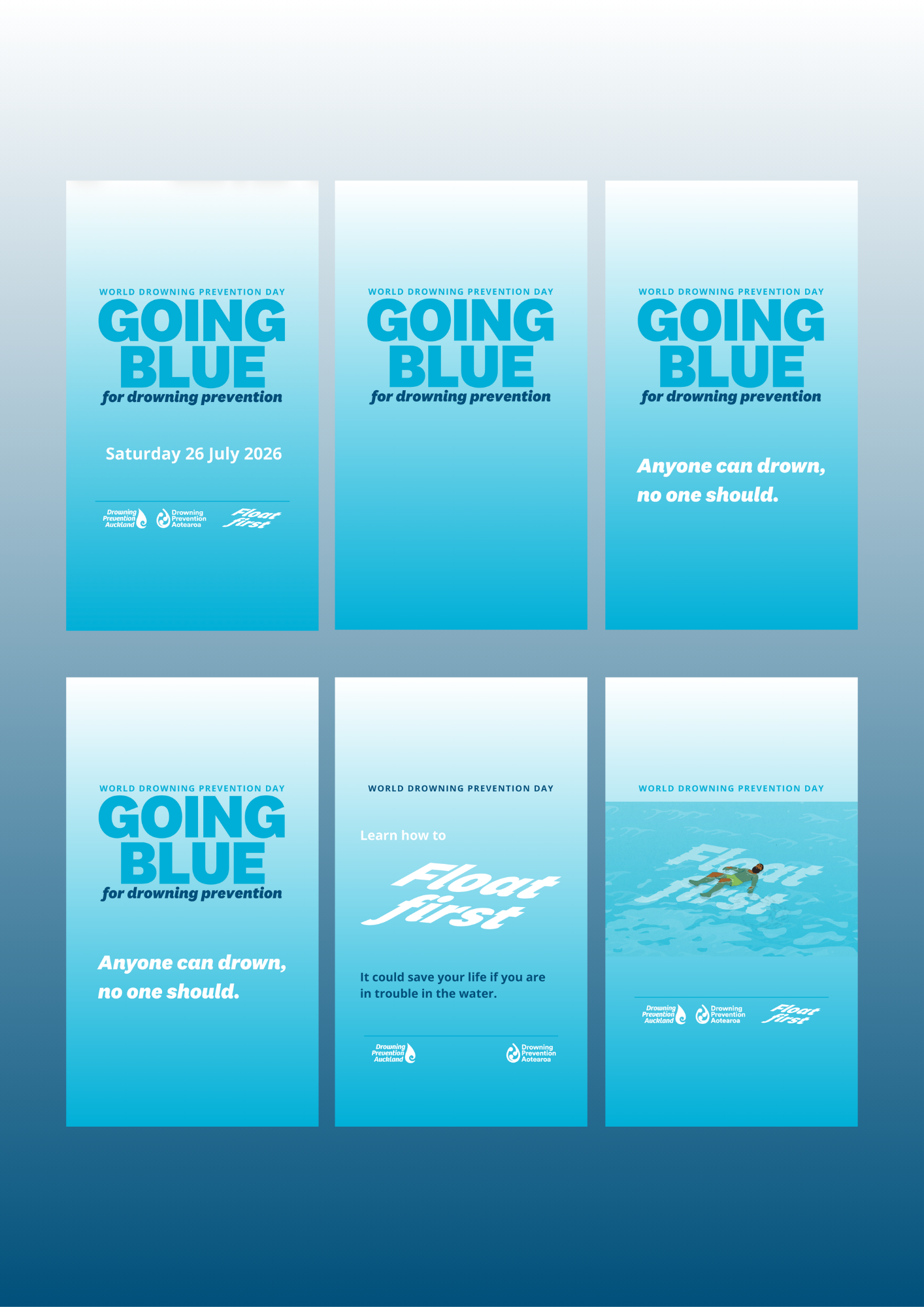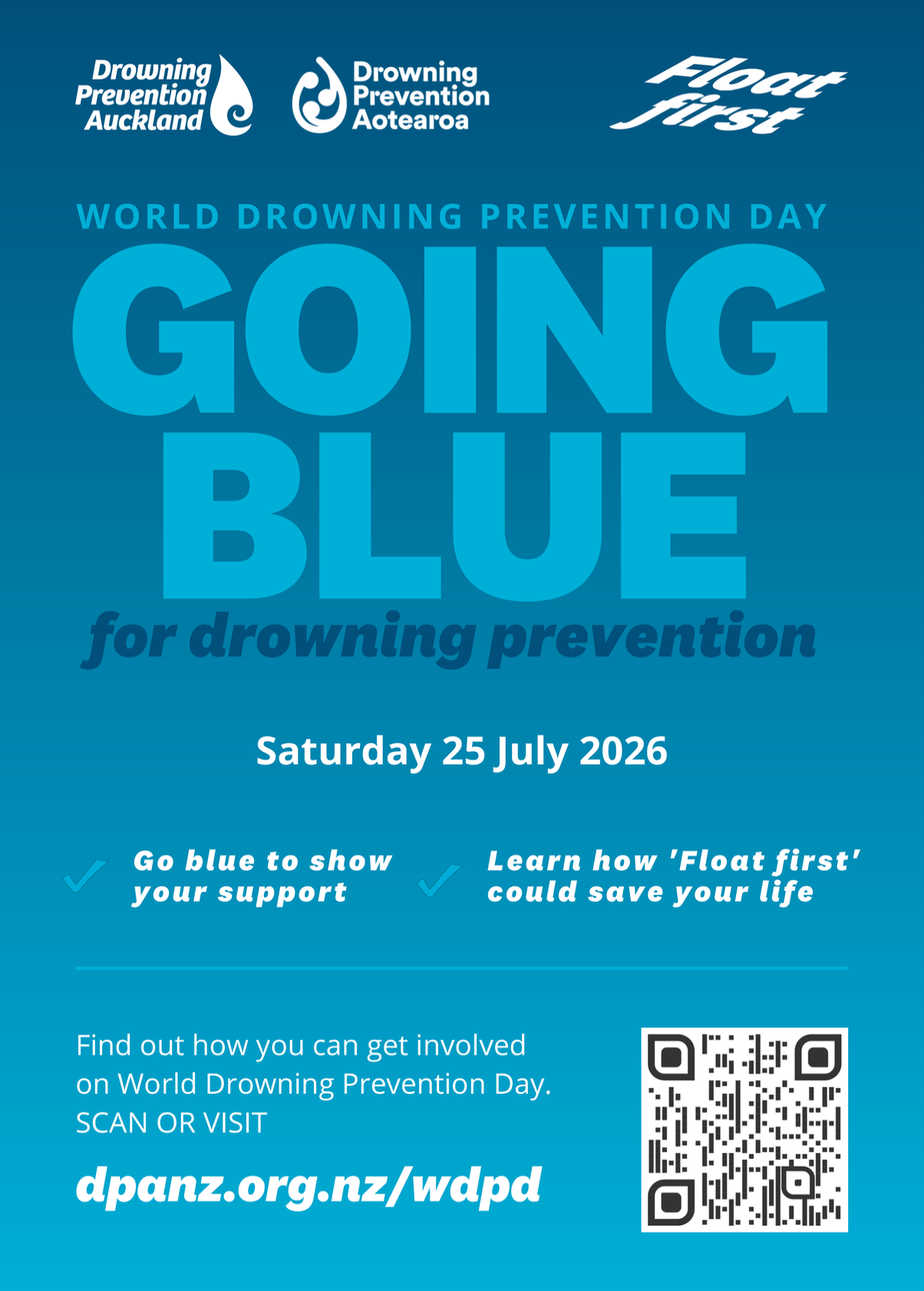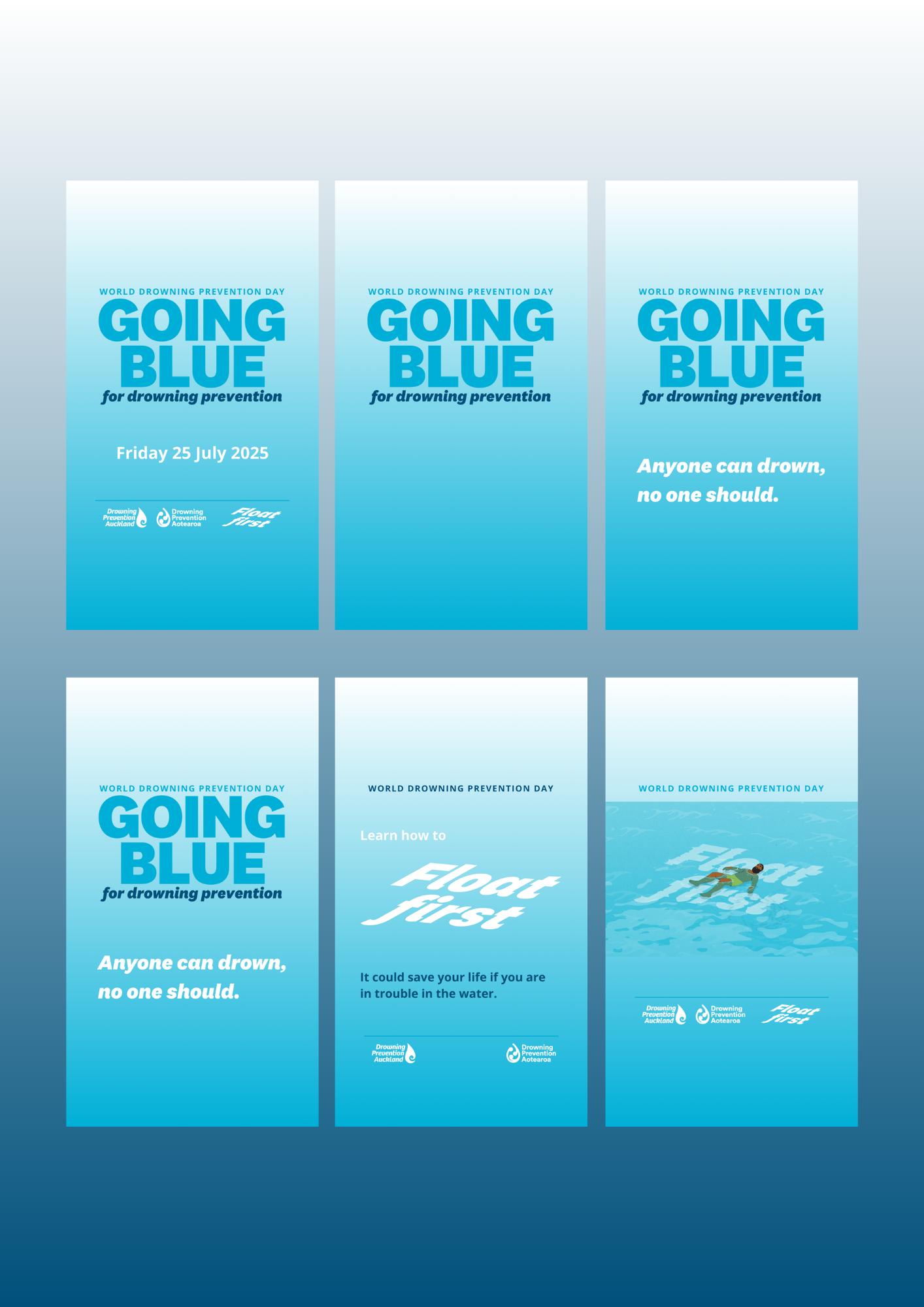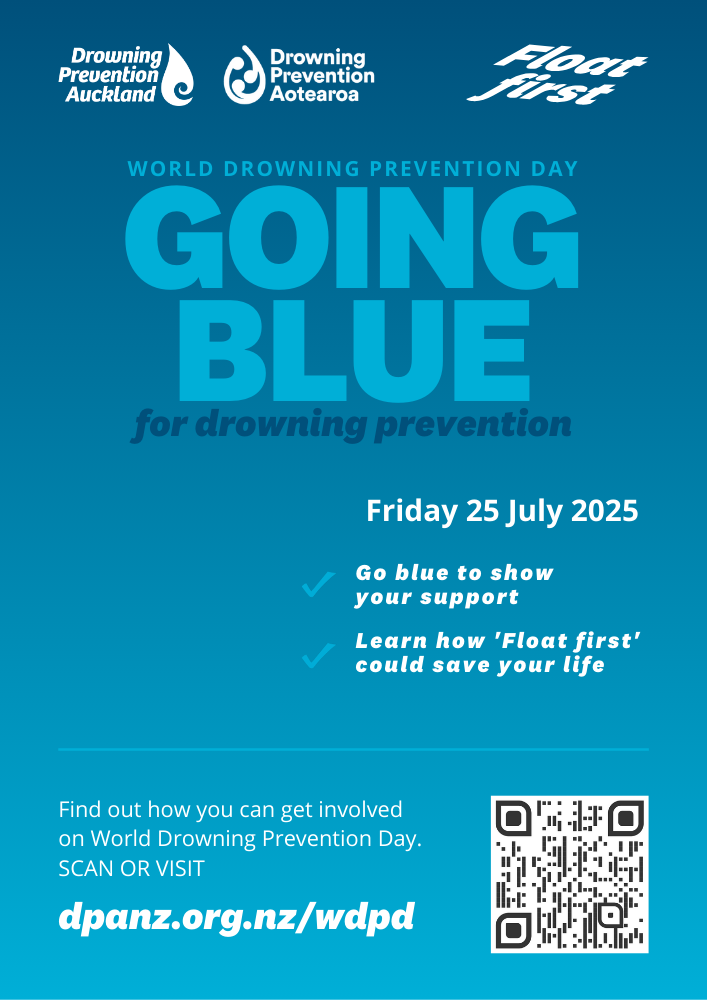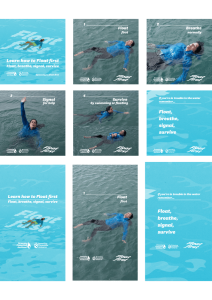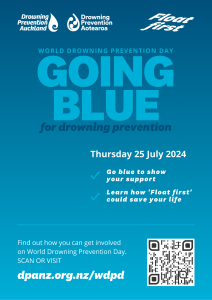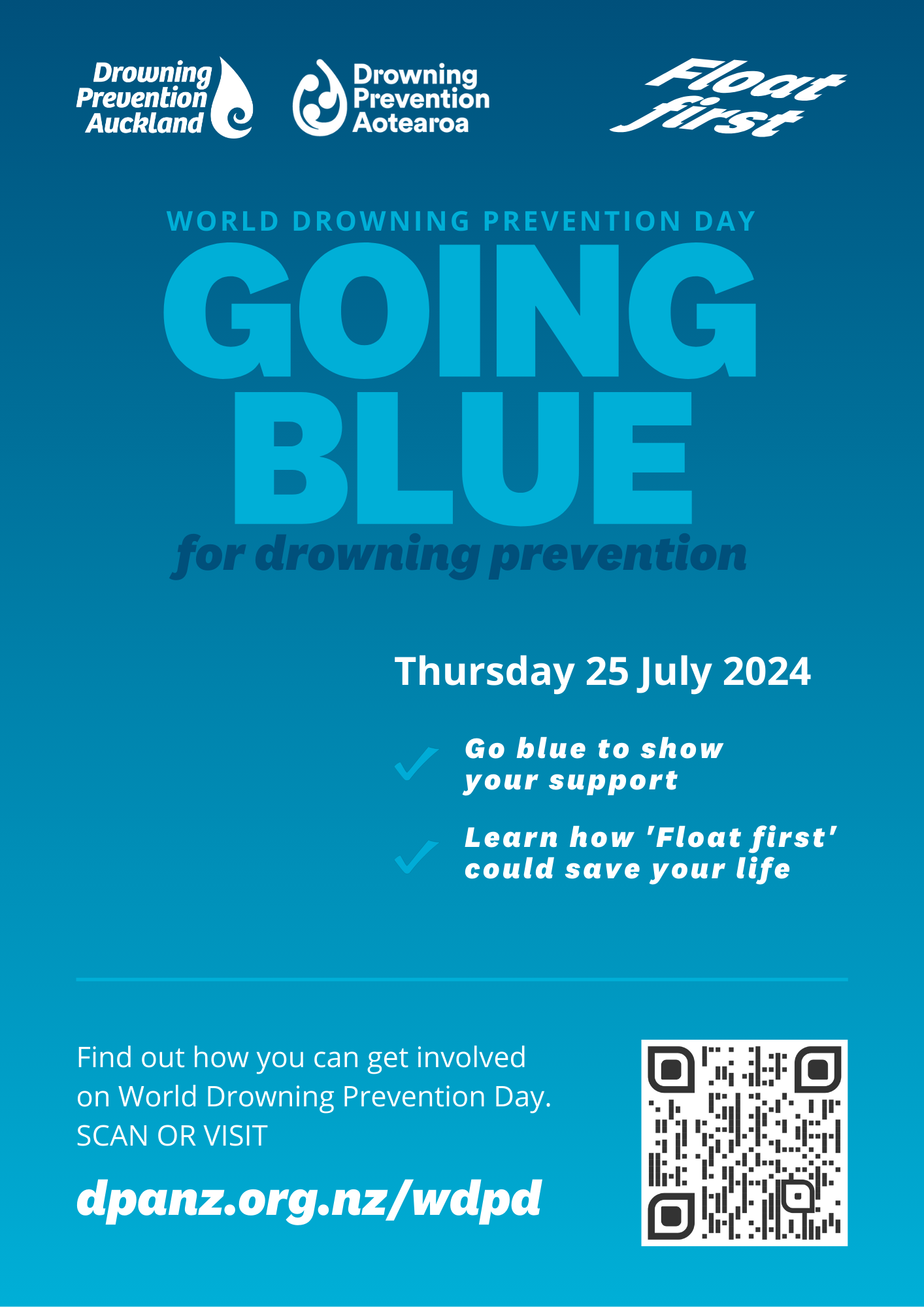

Join the Flash Float Experience at AUT Millennium Pools on World Drowning Prevention Day – 25 July!
Can you float for 90 seconds? Bring your friends, test your floating skills, and have a blast while spreading the Float First message. It could save someone’s life!
Picture a flash mob, but in the water – no choreography required! Just lie back, relax, and Float First. It’s going to be fun. Plus, you could win exciting spot prizes, including sports gear and free pool passes worth over $100!
Sign up today and invite your friends, colleagues, and family. Together, we can raise awareness about Float First – a survival response for anyone in trouble in the water. Just 90 seconds of floating can reduce the risk of drowning.
This event is organised by Drowning Prevention Auckland in partnership with AUT Millennium. Don’t miss out on this opportunity to make a difference on World Drowning Prevention Day
When
Date: Thursday 25 July
Times:
- Flash Float 1: 7.30am
- Flash Float 2: 9.30am
Arrive at least 20 minutes before to make sure you are ready to join in the fun and get floating tips from DPA educators.
Learn more and register here for free entrance!
Find out more about the Float first survival response.
Developed by water safety educational charity – Drowning Prevention Auckland
You can also donate today to support our work to keep our communities safer when in, on and around water.
Other news

New eLearning module for parents and caregivers of under fives
Concerted efforts in education for parents and young children, together with legislation around pool fences and barriers have significantly reduced drowning in children aged under five-years. However, under-fives still comprise 6% of preventable drowning fatalities...

Manawa Makes a Splash
Manawa means heart in Te Reo Māori and “our heart” is what Manawa Harrison, 17, is to his friends and whānau. Manawa’s journey has not been an easy one. He was diagnosed at a young age with Autism, ADHD, SPD and mild Tourette Syndrome. He had trouble focusing in...

Water Competency Sessions
Adult drowning rates in New Zealand are increasing. Research has found that this is likely for a number of reasons: Lack of water safety practice Entrenched unsafe attitudes toward open water participation Underestimation of risks in aquatic activity Overly optimistic...