Research shows that one of the main reasons these situations turn into tragedies is the lack of a flotation device.
Most fatal drownings occur in environments without professional supervision, such as rivers, lakes, and unpatrolled coastal locations, meaning bystanders are often the first and only people able to respond.
Remember the 4 Rs of Bystander rescue: Recognise, Respond, Rescue, Revive.

Recognise
- Look for distress – climbing the ladder, can’t respond, can’t swim, panic, fear, or sinking
- Shout “Are you okay?”
- Scan the scene: Is it safe for you to help?
- Think helpers: who else nearby can assist or call 111?

Respond
- Get flotation to the person (life ring, boards, bottle, chilly bin – anything that floats)
- Call 111 or direct a bystander to and ask for Police.
- Keep talking: reassure and encourage them to hold on and keep floating.
- Keep reassessing safety: the drowning person, you, others.

Rescue
- From land: reach or throw – use PRE, a pole, paddle, towel, rope or clothing.
- Only enter the water as a last resort. Always take flotation.
- Keep your distance. Keep flotation between you and the drowning person.
- Reassure and guide them to float or swim back to safety.

Revive
What to do
- Make sure 111 has been called.
- If not breathing normally, start CPR.
- If breathing, keep airway clear and put in recovery position.
- Stay until emergency help arrives.
Public Rescue Equipment
Public Rescue Equipment (PRE) includes items like rescue buoys, life rings and throw ropes. These are flotation devices that help retrieve a drowning person while also keeping someone afloat if they are in trouble in the water. Having access to this type of equipment means that bystanders can safely assist a person if they are in trouble in the water.
When installed in public areas, PRE allows people nearby to help in an emergency situation, before emergency services arrive. The main purpose is to give the public an easy-to-use rescue tool. It helps people act quickly without putting their own lives at risk. Drowning can occur within 60 seconds, often before emergency services may be able to respond.
When used properly, PRE can save lives and greatly reduce drowning incidents, especially where there are no lifeguards on duty.
How to use PRE
How to use a life ring and throw bag
These are generally found at inland moving water and harbour environments
If someone is in trouble, get someone to call 111 and ask for Police. Use the public rescue equipment provided. Pick up the life ring and throw it toward the person so they can stay afloat. Watch them and wait for help to arrive.
Do not enter the water. Instead, use the public rescue equipment provided. Pick up the life ring and keep hold of the end of the rope. Throw the ring as close as you can to the person and gently pull them to shore if safe to do so. If you miss, pull the public rescue equipment back to shore and try again. Tell the person in the water to hold onto the life ring.
Stay calm throughout the rescue, instruct the victim to remain calm. Recognise what’s happening, respond quickly by getting help and using the right equipment, rescue from land if possible, and revive with CPR or use the recovery position once they’re on land.
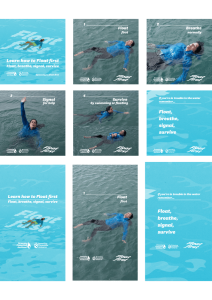
If you fall in yourself – Float First. Float your ears underwater, chin up. Breathe normally. Relax, raise your arm, and signal for help. Remember, floating buys time and helps you stay calm until rescue arrives.
How to use a life ring and throw rope (unattached)
These are generally located at rocky coastal environments and waterholes
If someone is in trouble, get someone to call 111 and ask for Police. Use the public rescue equipment provided. Pick up the life ring and throw it toward the person so they can stay afloat. Watch them and wait for help to arrive.
If a throw bag is available, keep hold of the end of the line, throw the bag to them, and pull gently to shore when safe. Never enter moving water. If you miss, pull the throw bag back to shore and try again. To reset the throw bag after use put the rope over your shoulder and feed it gently into the bottom of the bag.
Recognise when someone needs help, respond by calling for assistance and using the equipment available, rescue and bring to the shore only if there is a safe place, and revive using CPR or place them into the recovery position if necessary once they’re out of the water.
How to use a rescue buoy
The first thing to note is: if you can’t swim, do NOT use a rescue buoy device and do NOT enter the water.
Then, if someone is in distress in the water and there are no lifeguards on site:
Get someone to call emergency services on 111, ask for police.
Rescuing from land is the best option, if possible. Assess the conditions and only enter the water as a last resort.
Lift the buoy off the cradle.
Undo the velcro from the sash, and put the sash over your shoulder to sit diagonally across your chest.
If possible, alert others before entering the water with the PRE.
Where to find water safety signage or PRE
Public Rescue Equipment (PRE) is installed in places where people are most likely to need help near the water.
Drowning Prevention Aotearoa has worked with Councils or land managers around New Zealand to install signage and PRE stations at inland locations, including rivers, lakes, waterfalls and other popular freshwater sites across the country.
Find out where PRE is located at your local waterways.
SLSNZ and DPA as part of the Operation Flotation project have endorsed the installation of water safety signage and PRE at surf life saving clubs, rocky coastal areas and inland water environments across New Zealand. We would like to thank SLSNZ, Councils and land managers for their collaborative efforts to enable these installations.
Find out which beaches have water safety signage and PRE over at the SLSNZ website.
Improvised flotation
If public rescue equipment is not immediately available, improvised flotation can be used to help support a person in the water.
In an emergency, many everyday household items can provide effective flotation by trapping air. Items such as empty milk bottles, balls, chilly bins, or sealed bags can be thrown or extended to a person in trouble to help keep their airways above water.
Providing flotation can interrupt the drowning process by giving the person something to hold on to, reducing panic, and buying critical time until help arrives.
In the heat of the moment, do not delay waiting for formal rescue equipment if it is not accessible. Always take or throw a form of flotation – even improvised flotation is better than nothing.
Do you know a location in New Zealand that should have PRE installed?
We’d love to hear from you. We can provide all the information and pricing needed to support the installation of a PRE unit in your community.
Contact us: PREorder@dpanz.og.nz
Check out our Guide to PRE for inland waterways in Aotearoa New Zealand.