
Help us save lives this winter. Get behind DPA’s epic Float first Fundraiser.
Want to have some fun this winter, get involved, and raise money and awareness for a great cause? A cause that could save your life, the life of your loved ones, or someone in your community by preventing drowning. Read on to find out more about Float first, why everyone should learn this vital lifesaving skill, and how you can get behind this year’s Float first fundraising campaign. You’ll have plenty of time (over two months) to raise money for this great cause. The campaign runs from Friday 23 May until Thursday 31 July – including World Drowning Prevention Day on Friday 25 July. Keep reading to discover the impact your fundraising efforts will make too!
What is Float first and who is it for?
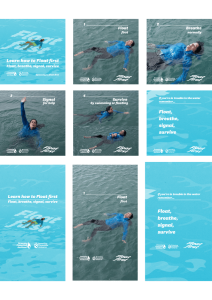
Float first is for everyone – no matter your age, body type, gender or swimming ability. Anyone can accidentally fall into the water or get caught in a strong current or rip. Immersion – which is unplanned or unknown entry into the water – is one of the leading causes of drowning fatalities in Auckland and across Aotearoa. If you don’t have the skills, you’re at risk of panicking, suffering from cold water shock and, tragically, drowning. Float first is about knowing how to respond, stay calm, and survive – especially in the critical first two minutes of getting in trouble in the water. Those first two minutes can make the difference between life and death. The message is simple, and the skills can be practised in a safe, controlled environment alongside a responsible adult (including in one of our education programmes). If you find yourself in trouble in water following these four steps can keep you safe until you can swim to shore or be rescued.

Float first
- Lie back with your ears underwater, chin up
- Move your hands to help you float
- It’s okay if your feet sink
- Ignore your instinct to swim

Breathe normally
- Relax
- Slow your breathing to help you calm down
- Breathing will get easier

Signal for help
- Raise your arm
- Shout for help

Survive by swimming or floating
- Swim to safety if you can
- Float when it’s not safe to swim
- Hold onto anything that helps you float
- Keep clothes on to stay warmer
Did you know most adults can’t float for as long as they think they can?
Float first is not just for kids. In fact, our study (Stanley, 2021) found most adults think they can float, and two-thirds think they can float for more than five minutes. When we tested floating ability in the water, it was revealed that only 2% could float for more than five minutes, with one-third floating for less than 15 seconds. Everyone can benefit from learning and practising the Float first skills before they get in trouble – so it becomes second nature.
But the good news is: everyone can float.
Whatever your age or experience with water, learning and thinking about floating as a first response is something we should all learn. The good news is everyone has the ability to float – either on their own or with gentle sculling (a figure-eight motion made with your hands in the water which can be accompanied by a gentle flutter kick).
Floating is a vital component of DPA’s educational programmes and is one of the 15 water competencies needed for drowning prevention.
What’s the real-world impact of learning these skills?
Knowing how to Float first saved nine-year-old Joseph’s life. When caught in a rip, instead of trying to swim against it, Joseph stayed calm and floated, until he could be safely rescued. Joseph attended DPA’s Splash holiday programme twice, where he practised water safety skills, behaviours and attitudes like floating, snorkelling, wearing a lifejacket, and more.
You can read more of Joseph’s story here.
Floating saves lives. You can too.
DPA provides education, research and advocacy to prevent drowning. For this Float first campaign we’re calling on you to help us fundraise. Imagine knowing the money you raise or donate will go directly towards water safety education so everyone knows how to enjoy the water safely. Keep reading to find out how you can make a lifesaving difference by being part of our Float first Fundraiser.
I’d love to get behind this campaign. What can I do?
We want to make this fundraiser as fun and simple as possible. That’s why we encourage you to choose from two options. If you’re feeling creative and adventurous, you can design and run your own Float first Fundraiser. Or you can simply donate through our campaign – no matter your fundraising experience or available time, there’s an option for you.
1. Get creative: Create your own Float first Fundraiser
Ask your friends, whānau and colleagues to sponsor you to help us raise money to prevent drowning here in Aotearoa New Zealand. Click the button below to visit our campaign page and select ‘I want to fundraise for this’. Keep reading for fundraising ideas.
2. Don’t have time to organise your own fundraiser? It’s easy to donate now
Want to support our mission to prevent drowning through education but don’t have time to organise your own Float first Fundraiser? Complete this form to donate today.
Design and run your own fundraising campaign.
Ideally your Float first Fundraiser will contain and reinforce the Float first survival response (float, breathe, signal, survive). Here’s 5 ideas for inspiration to get those ideas flowing.
1. Go the distance: move to fundraise.
Kayak, swim, run, bike, walk (or something else – maybe burpees or squats if you’re super keen!). Set yourself a distance and a time period to achieve this challenge – days or weeks, you’re free to choose. Maybe you could aim to finish your challenge on World Drowning Prevention Day on Friday 25 July. Create a fundraising page by clicking the button below and request sponsorship from your friends, whānau and community.
2. Gather together, learn together.
Bring your friends, whānau, or colleagues together for a shared morning tea, potluck dinner, or other social activity. Watch the ‘How to Float first’ video, get creative with our Float first colouring sheets or do one of the Float first activities on our website. Each participant can donate to your fundraising page and ask their network to support.
3. Friends who float together, stay together: group float.
If you have access to a sheltered body of water (this is really important: it must be done in a safe and controlled environment) – and responsible adults to run the event – get a crew together and float for a set amount of time. Each group member can seek sponsorship for being part of your group’s Float first Fundraiser.
4. Get creative on socials.
What could you do to get online attention for your fundraising campaign? How many different floating positions can you demonstrate (safely in water, against a fun backdrop, or just on the floor!) on social media, can you make your own ‘How to Float first’ video that you think would appeal to your social group? Maybe you could create a song, a rap or poem? Why not run a Float first colouring competition for your followers. Encourage people to learn how to Float first and donate to help prevent drowning in Aotearoa New Zealand.
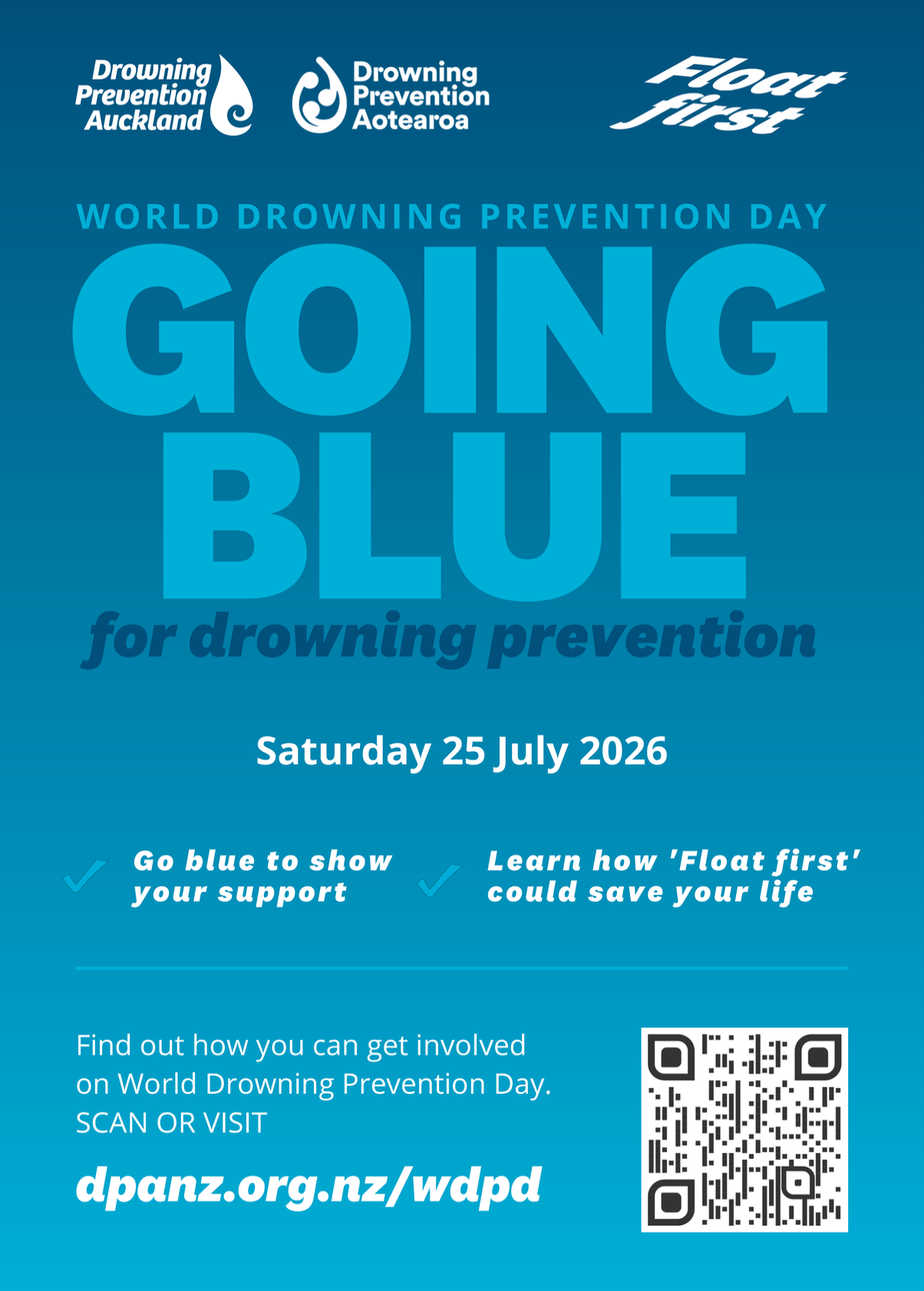
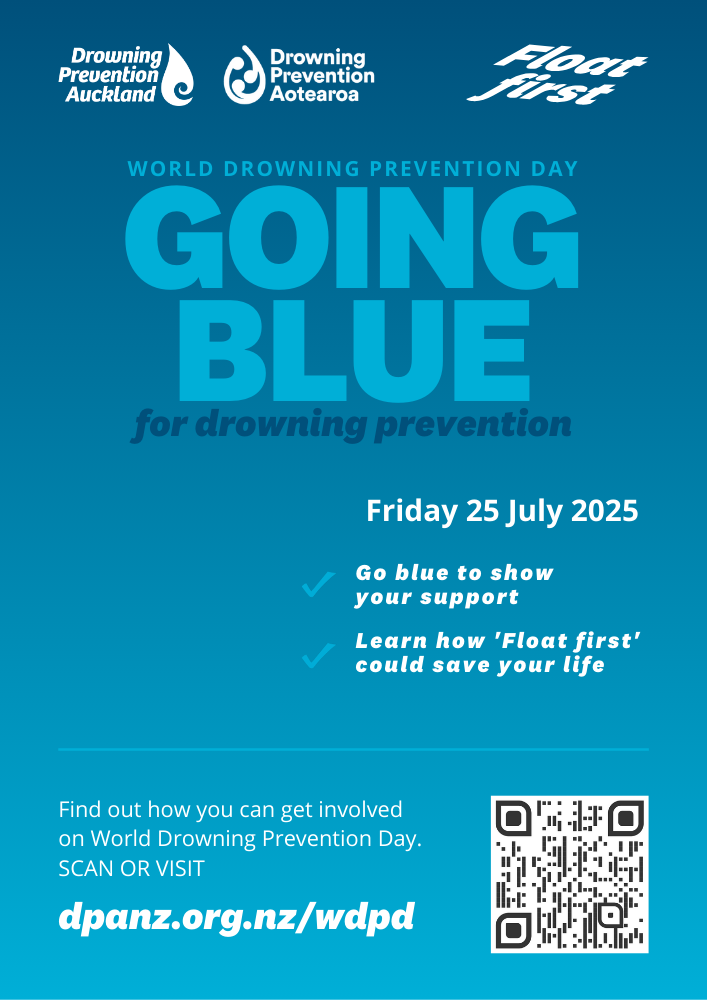
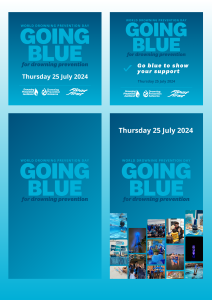
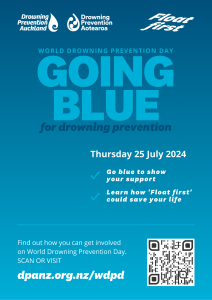
5) Going Blue for World Drowning Prevention Day on 25 July.
Make a day of it, join us in Going Blue for drowning prevention on World Drowning Prevention Day – 25 July. Get your school, workplace or community group to dress in blue for the day, bring blue baking to share, participate in Float first activities (activity worksheet, colouring page – found on our website). Set up your own fundraising page for your community to join in and support.
Why support DPA?
We know your time and money is precious – if this is the first time you’ve come across Drowning Prevention Auckland/Drowning Prevention Aotearoa here’s more about who we are and why our lifesaving work matters. Now in our 31st year, DPA is a charity with a vision of a future free from drowning. This is achieved through developing water competency and changing knowledge, attitudes and behaviours. Aotearoa New Zealand has so many beautiful water environments. In Tāmaki Makaurau Auckland alone, we have the Waitematā, Manukau, and Kaipara harbours; 411km of rivers; 128km of lake edge; and 3700km of coastlines. While wai is the source of life, we need to learn how to respect and understand it to prevent drowning. Our education, research, and advocacy are vital for the wellbeing and safety in, on and around water environments for all people across the country. We help individuals, families, communities and workplaces learn how to be safe from drowning across three channels – where we live, where we work, and where we learn. We’re always grateful for the generous financial support of our donors, partners and sponsors – thank you. You make it possible for us to reach thousands of people up and down the country with our lifesaving research, education and advocacy.
Remember to tag us on socials and use our hashtags
@dpanzDrowningPrevention #FloatfirstFundraiser #FloatingSavesLivesSoCanYou Thanks so much for getting behind our Float first Fundraising campaign. Tag us on your socials or email us photos and description of your fundraising adventures – we can’t wait to see your creativity!
Other news

Knowing how to Float first saved Joseph’s life
Joseph and Dad JonJoseph’s reply made Jon’s heart drop. "I'm trying Daddy, I can't. I can't." A rip lifted Joseph up and started quickly taking him away from the beach. “With little warning it goes from being…everything seems to be under control to everything's...

Activating water safety in the community
Over the past month, Drowning Prevention Auckland has actively promoted water safety education to people of all ages and experiences across a variety of settings. Highlights include the Wai Wise workshop for Asian and Pasifika communities, lifeguard training at Mt...

School adds water safety into outdoor education
Education Outside the Classroom (EOTC) provides the perfect opportunity for students to develop aquatic competencies. Bringing learning to life and finding out first-hand how to stay safer in, on and around the water. Drowning Prevention Auckland (DPA) works with...

Commemorating 10 Years of Safety: The Uretiti Beach Crab Fishing Workshop
Commemorating 10 Years of Safety: The Uretiti Beach Crab Fishing Workshop DPA, alongside the Waipū Police, Waipū Cove Surf Life Saving Club, and the Ministry for Primary Industries (MPI), hosted our signature open-water workshop at Uretiti Beach, Waipū, late last...

World first lifejacket initiative
Lifejackets accessible at high-risk location in world first initiativeAt the end of November, Drowning Prevention Auckland (DPA) installed a remote Lifejacket Station at Te Henga Bethells Beach in partnership with local iwi Te Kawerau ā Maki. In this global first of...

Summer pool safety
Take five minutes today - it might save a life tomorrowSummer’s here and that means long days, warm nights, and plenty of time in the pool. But, each summer, New Zealand families are devastated by preventable drownings in home pools. In Aotearoa New Zealand, an...