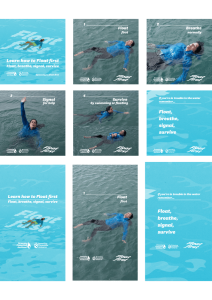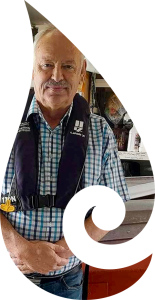

In the story below, one participant shares how the Aquatic WOF helped them move from being afraid of water to feeling more capable and confident in the sea and in swimming pools. Their experience is a great reminder that regularly testing your ability in the water is key to staying safe and prepared, especially as ability and fitness changes over time.
Leo’s story: From fear to confidence – Three years of Aquatic WOF
I had been afraid of water since childhood. I never went to swimming pools and always stayed well away from the sea.
A few years ago, I met my girlfriend, who is an able swimmer. One day we went to the beach at Tāwharanui, and she encouraged me to try bodyboarding in the safe swimming zone. To my surprise, I immediately enjoyed the feeling of the sea waves pushing me forward. That moment sparked something in me, and I began to seriously consider learning how to swim.
I started with a few group lessons at Tepid Baths in Auckland CBD and practiced on my own after each session. Over time, I improved and could swim freestyle quite well, but deep water still scared me. That was when I discovered the Drowning Prevention Auckland (DPA) Aquatic Warrant of Fitness (Aquatic WOF) programme.
I first participated in the 2023 and 2024 Aquatic WOF sessions. The instructors were incredibly supportive and helped me build confidence in the water. I learned essential skills such as deep-water exits, floating on my back, wearing a life jacket, and swimming as far as I could in five minutes. I remember only managing about 100 metres at first.
Recently, I attended the 2025 Aquatic WOF, and the tips and advice from Josh really made a difference. I discovered that the “X” floating technique works best for me to stay afloat for long periods, which is crucial if I ever need to wait for help in open water. I also learned how to put on a life jacket quickly and comfortably.
The biggest surprise was my improvement. I managed to swim 200 metres in five minutes. A great tip from Josh was to conserve energy by switching between swimming styles. I swam the first 50 metres freestyle, then alternated between backstroke and freestyle for the rest.
The Aquatic WOF programme has completely changed my relationship with the water. I now have the confidence, competence, and practical skills that I know could save my life.


Other news

New Lifejacket Hub – Bethells SLSC
Our latest lifejacket hub is now established in partnership with Bethells Surf Lifesaving Club. This is in response to our Rock Fishing project and our knowledge that many fishers still do not wear life jackets. One of the barriers to wearing lifejackets is the...

Engaging Newly Settled New Zealanders in Water Safety
At the end of March one of our Aquatic Educators, Leilani Fuemana, presented at the Virtual Pre-Conference Global Injury Prevention Showcase for 2021. Drowning prevention was a key focus of the showcase. Leilani talked to participants about Drowning Prevention...

New Early Childhood e-Learning module
On the eve of a nationwide strategy being released to tackle the country’s drowning statistics, Drowning Prevention Auckland is seeking to highlight the dangers that tamariki can get into without raising an alarm. The New Zealand Water Safety Sector Strategy 2025 will...